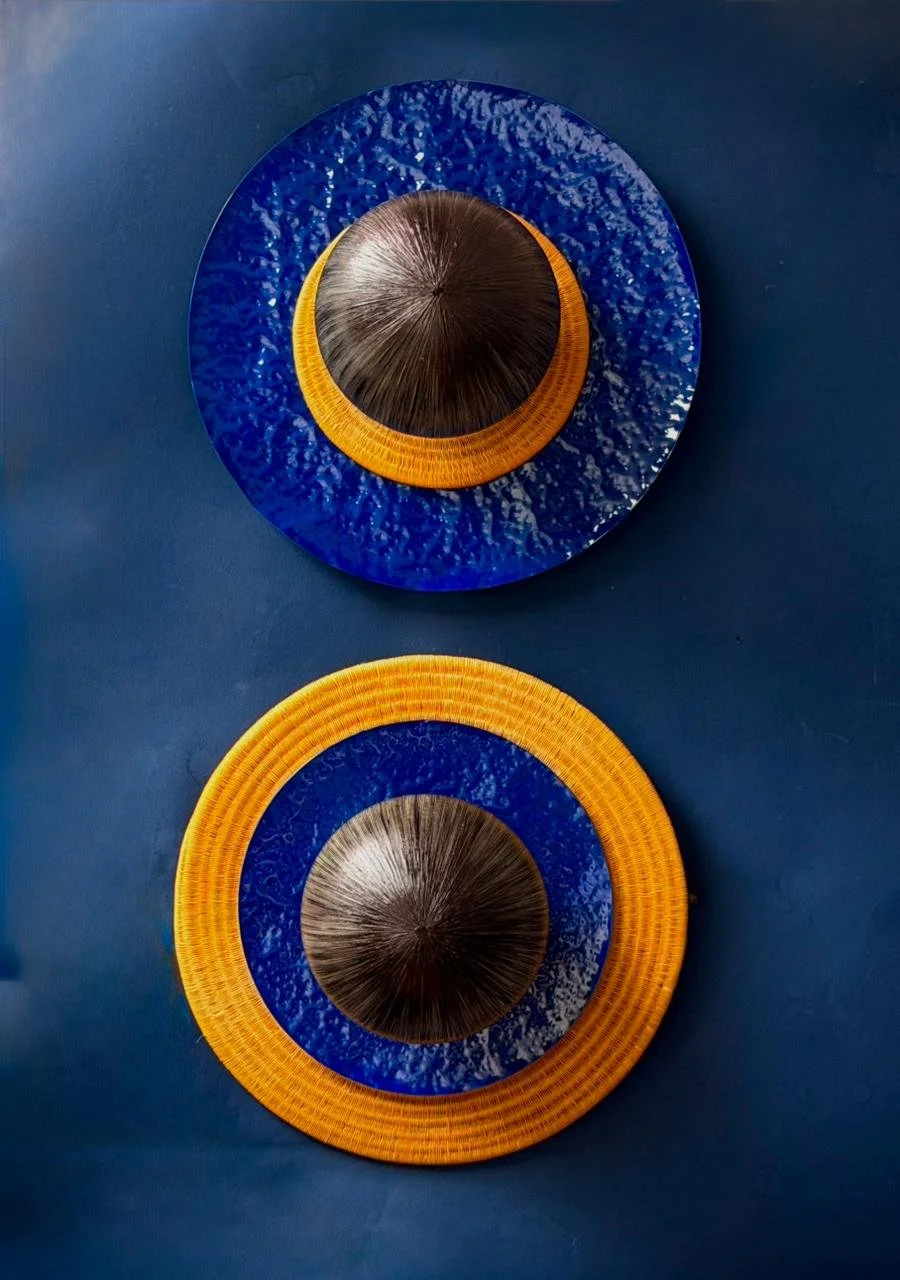
Maker Series: 01. Meet Alejandro from Alta Estudio, Colombia.
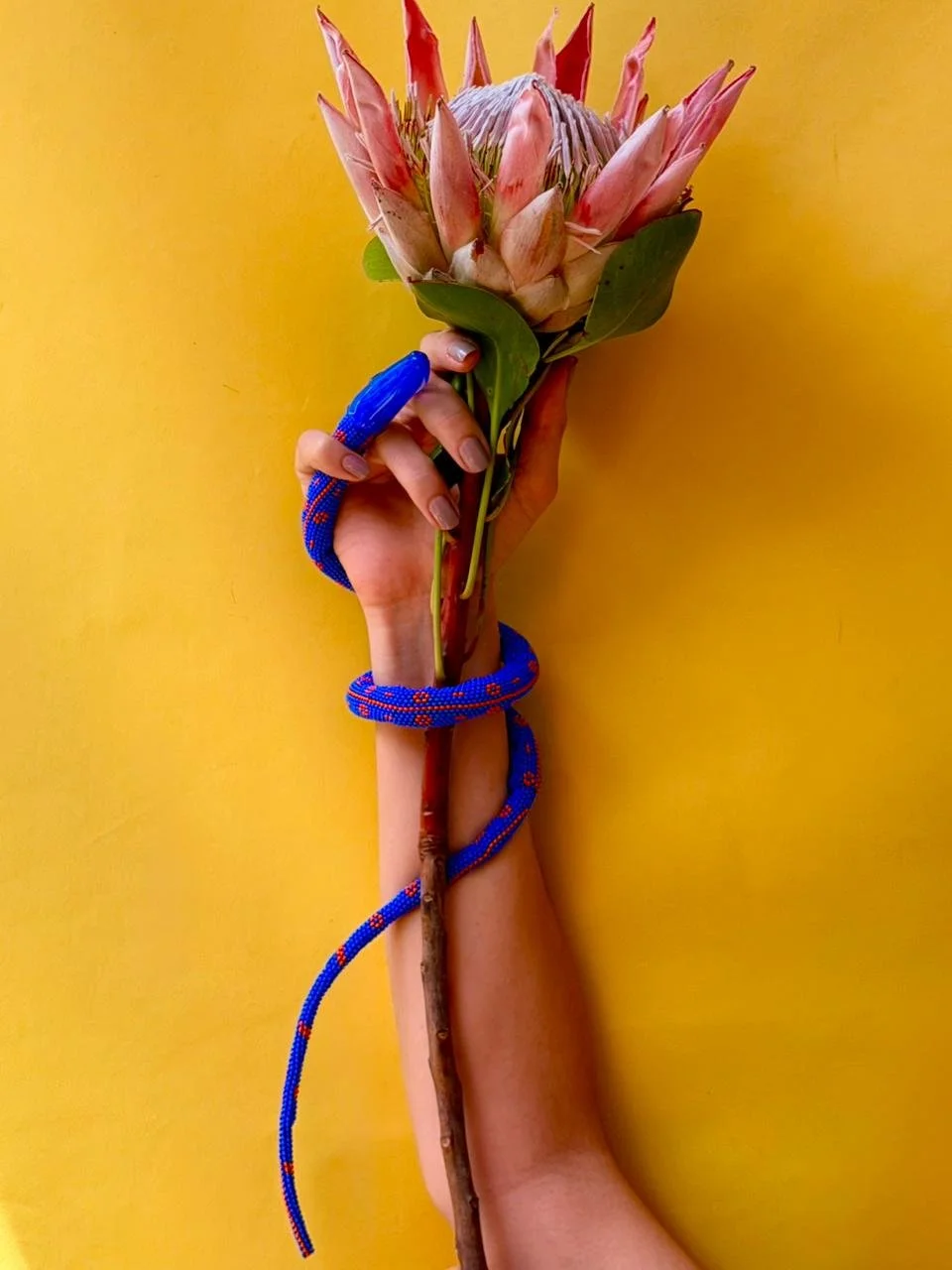
First, can you introduce yourself and your work?
Hello, my name is Alejandro Tapias Hernandez. I’m the creator of Alta Estudio. I define Alta as a journey through my country, Colombia, through its culture, handmade crafts, landscapes, fauna, and flora.
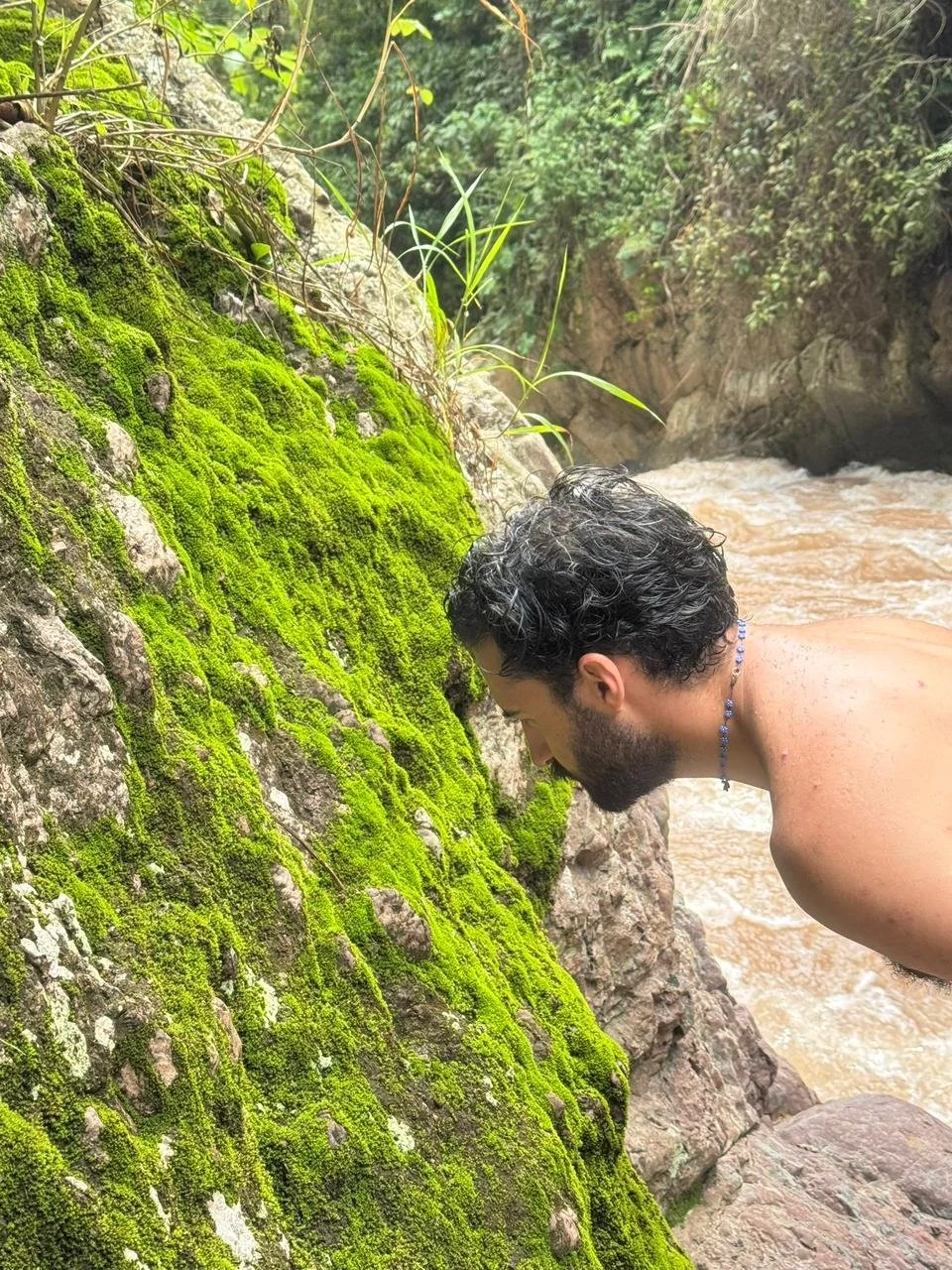
Can you walk us through your creative process—from the first spark of an idea to a finished piece? What usually comes first: material, form, or story?
It usually begins when I fall in love with a particular craft or with a place I visit. From there, I start researching the material—where it comes from, how it’s extracted, what the artisan uses the object for. I ask myself: How would I use it? I observe the colors, the knots, whether it incorporates other fibers or materials, how long it takes to make.
When I fall in love with a place, I ask different questions: What is the climate like here? Who is the community that lives here? How did they arrive? What history does this community have? What does this place represent culturally? What materials are found in the area, and how are they transformed?
Once I’ve answered these questions, I begin sketching forms and writing ideas, transforming the paper. If I’m on location, those sketches often become prototypes made right there—I start knotting, experimenting, and observing how the artisan transforms the material. Then I return to my home-studio, where I begin shaping the idea more fully, creating a collection inspired by that craft, that territory, or both.
We produce prototypes and refine the object. I take photos—it’s a process I deeply enjoy: creating worlds that elevate these objects and give them context. I place them in my home-studio, use them, move them around, display them—and then I release them to the public.
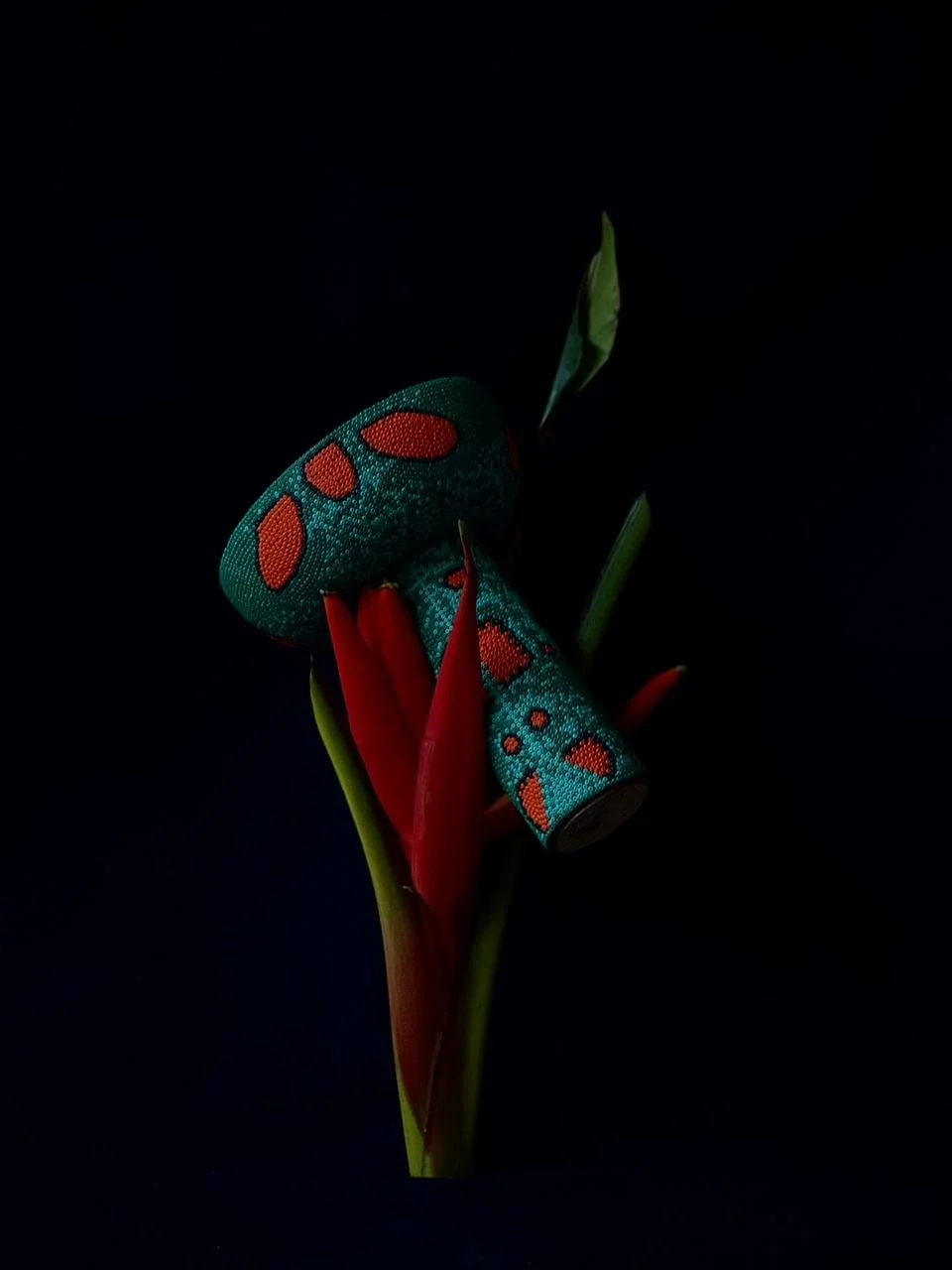
How does Colombia shape your work? Are there specific landscapes, traditions, or everyday details that consistently influence your designs?
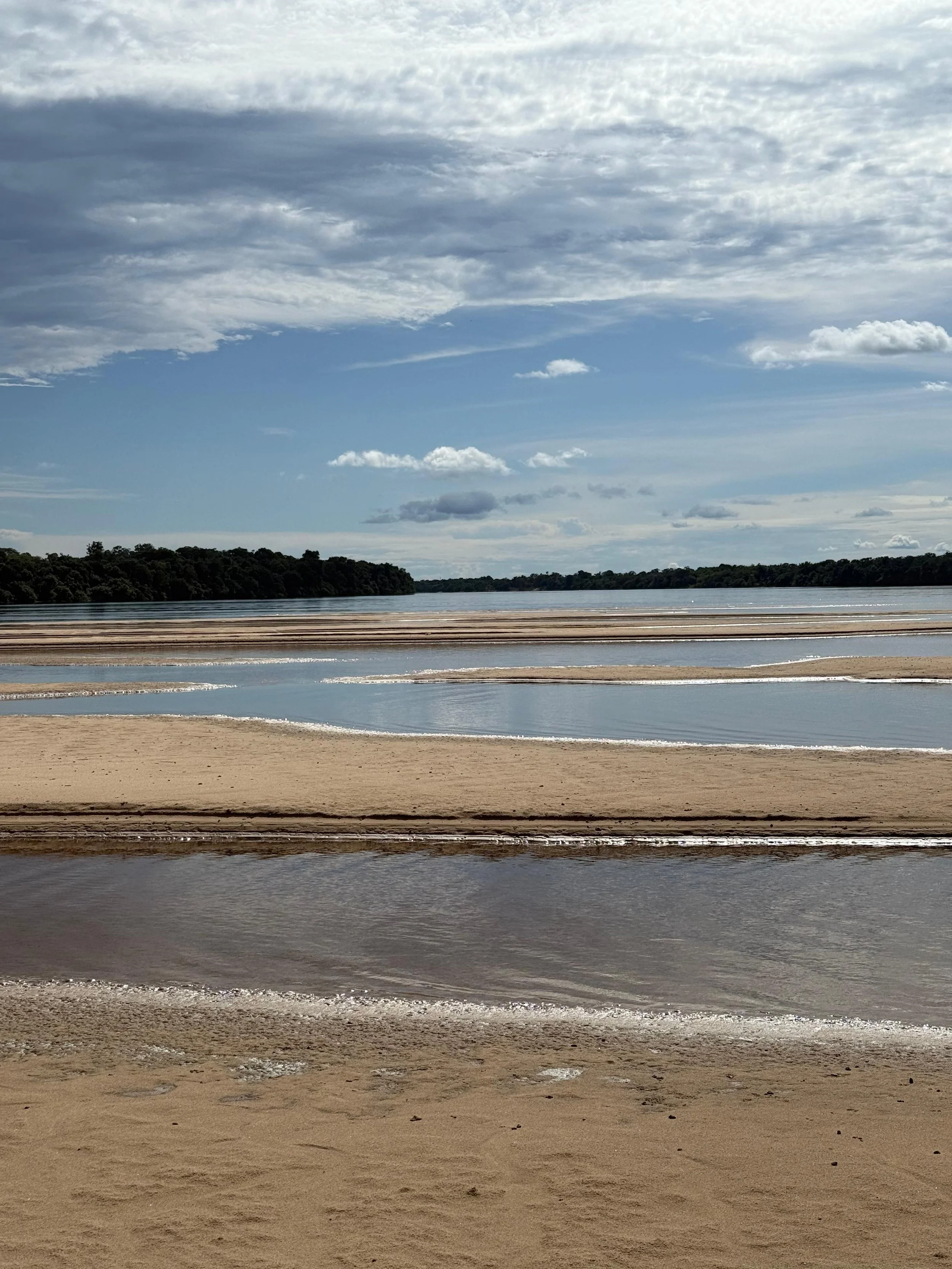
Colombia is my source of inspiration. Living abroad, I realized I was a “false Colombian”—I didn’t really know my own country. I also realized that internationally, Colombia was known mainly for coffee and Pablo Escobar—more often the latter than the former—and that shocked me.
When I decided to return, I made a promise to myself: first, to get to know my country from the roots. I found those roots in the materials produced here and in the people who transform them. Then, I wanted to show the world that Colombia has so much to offer. It’s one of the most biodiverse countries in the world—not only in landscapes (we have all climates without being a country of seasons), but also in fauna and flora.
One strange advantage of having spent 50 years in conflict is that much of our nature remained “untouched.” After the peace agreement, there were places that Colombians hadn’t set foot in for decades, where nature had taken over. Every day, we discover new species of flowers, insects, reptiles.
For me, Colombia is everything. It is the soul of Alta. I want to put my country “in alta”—on a high level—because there is high quality here, because we still make things by hand, and nothing can replace that.
What role do materials play in your practice? Do you begin with what’s locally available, or do materials reveal themselves along the way?
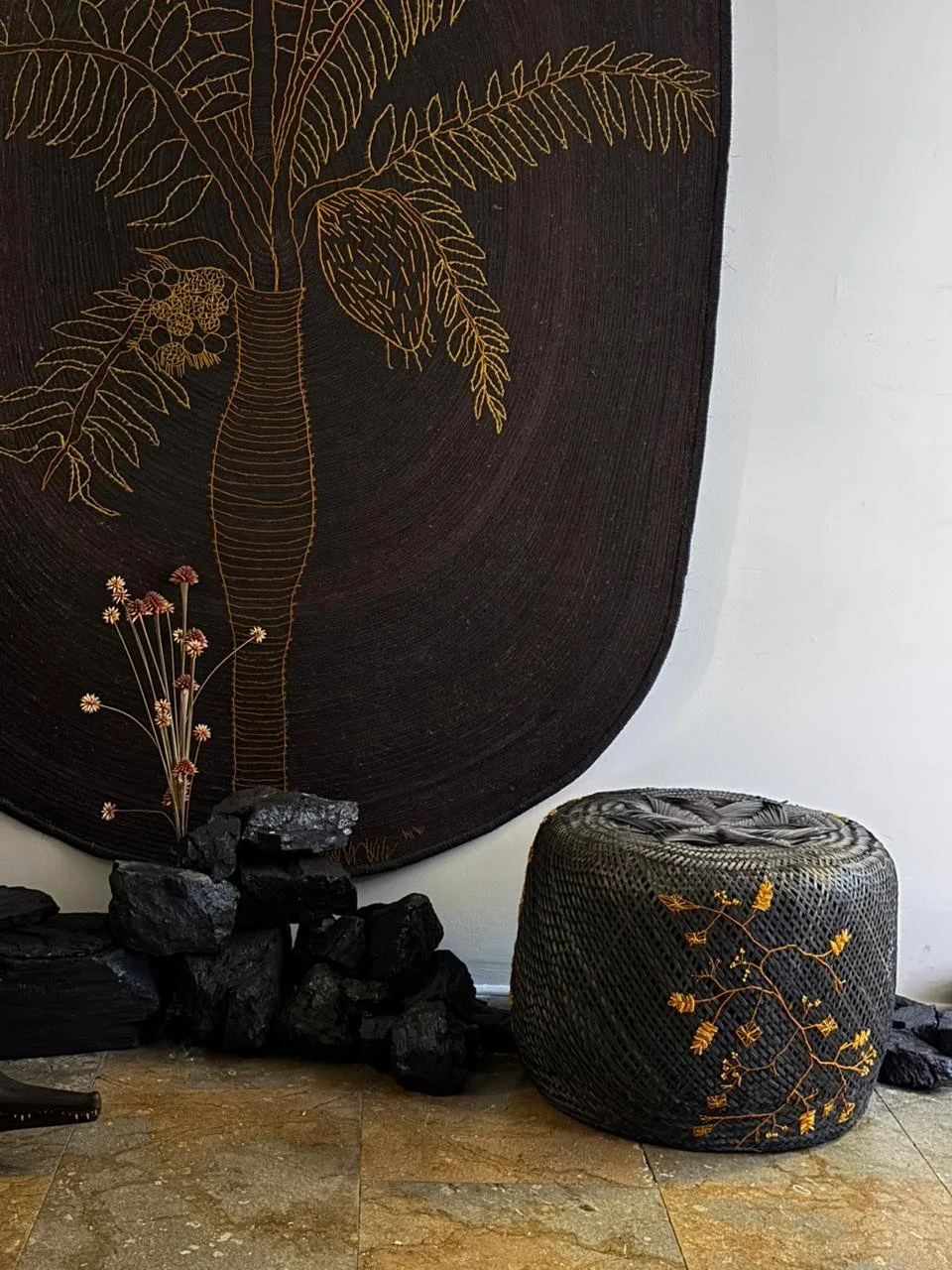
I start with what is available in each territory and then begin mixing materials together. After launching Alta, I faced many issues with copying. Instead of seeing it as a problem or fighting against it, I took it as an opportunity to do things differently.
I found my formula: mixing. Just as my country is a mix of Indigenous, European, and American cultures, my products are a mix of many techniques and many hands behind them—each one leaving its unique mark.
How do you balance experimentation with respect for traditional techniques or artisanal knowledge? Where do you allow yourself to push boundaries—and where do you choose to preserve?
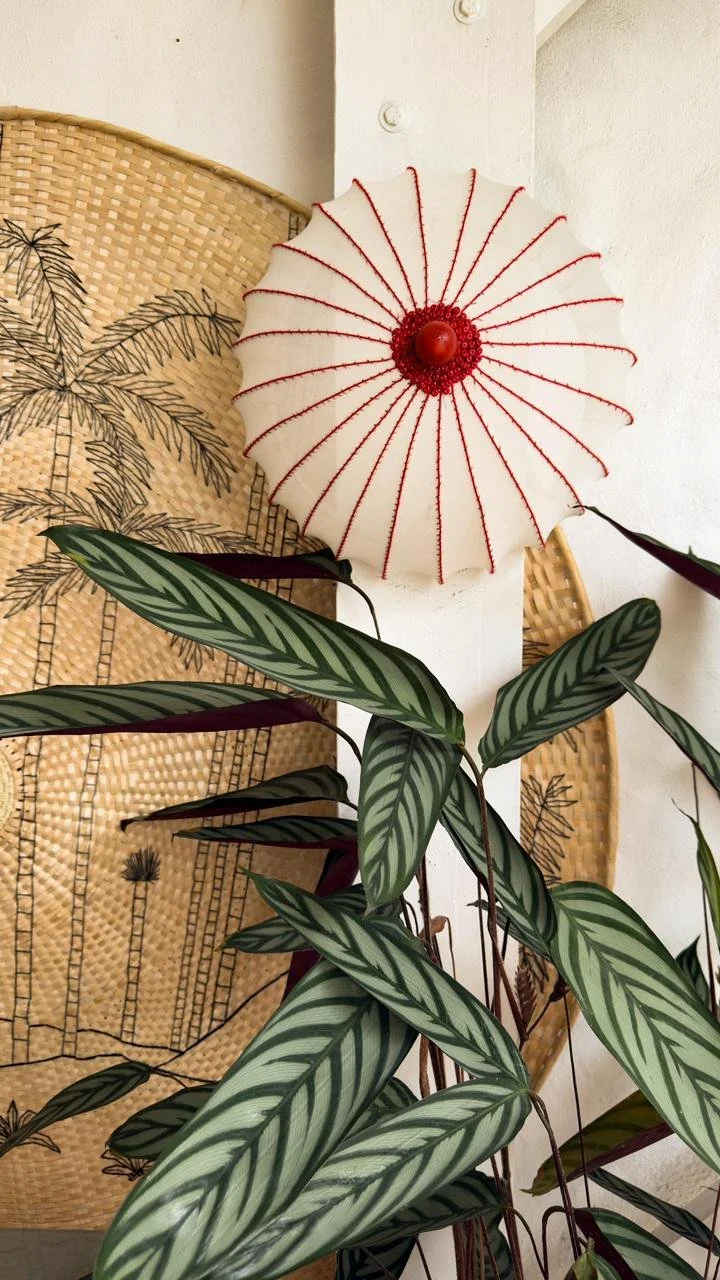
I think every product contains both. On one hand, I preserve a technique and the value of handmade work. On the other, I take that technique into a new world—through innovative patterns, oversized scales, taking an everyday object and using it for something else, or using a material traditionally meant for one purpose in an entirely different way.
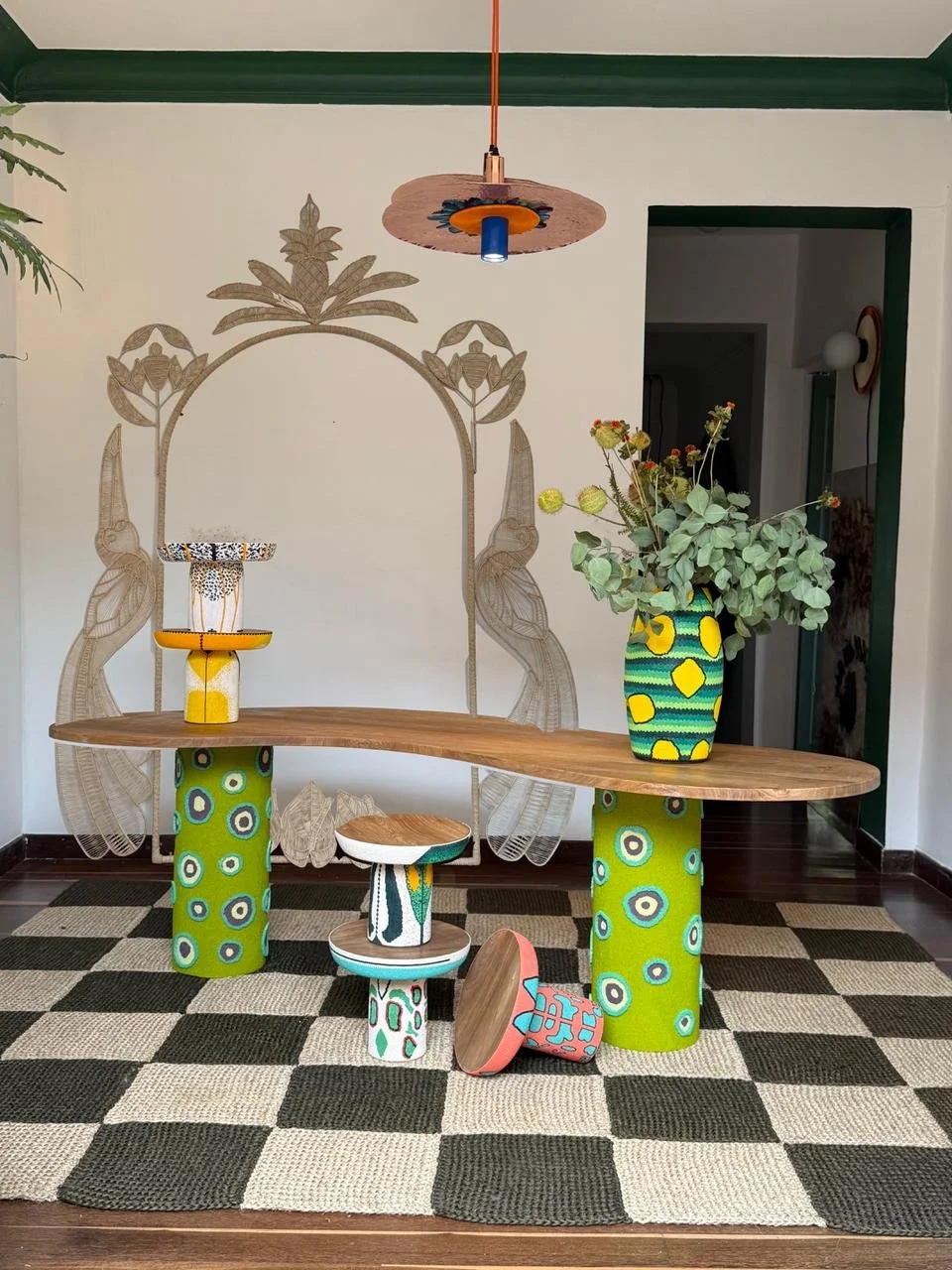
Collaboration with Farm Rio.
How do collaboration and dialogue—whether with artisans, suppliers, or other creatives—shape the final outcome of your work?
It’s a constant conversation. On paper, anything is possible, but in the end, it’s the artisans’ experience with their technique and their deep knowledge of the material that brings the vision to life. In my process, I’m always open to change and to their input—they are the experts in their craft, and their knowledge is what ultimately completes the idea in my head.
Time is often invisible to the end customer. How important is slowness, repetition, or patience in your process, and how do you communicate that value?
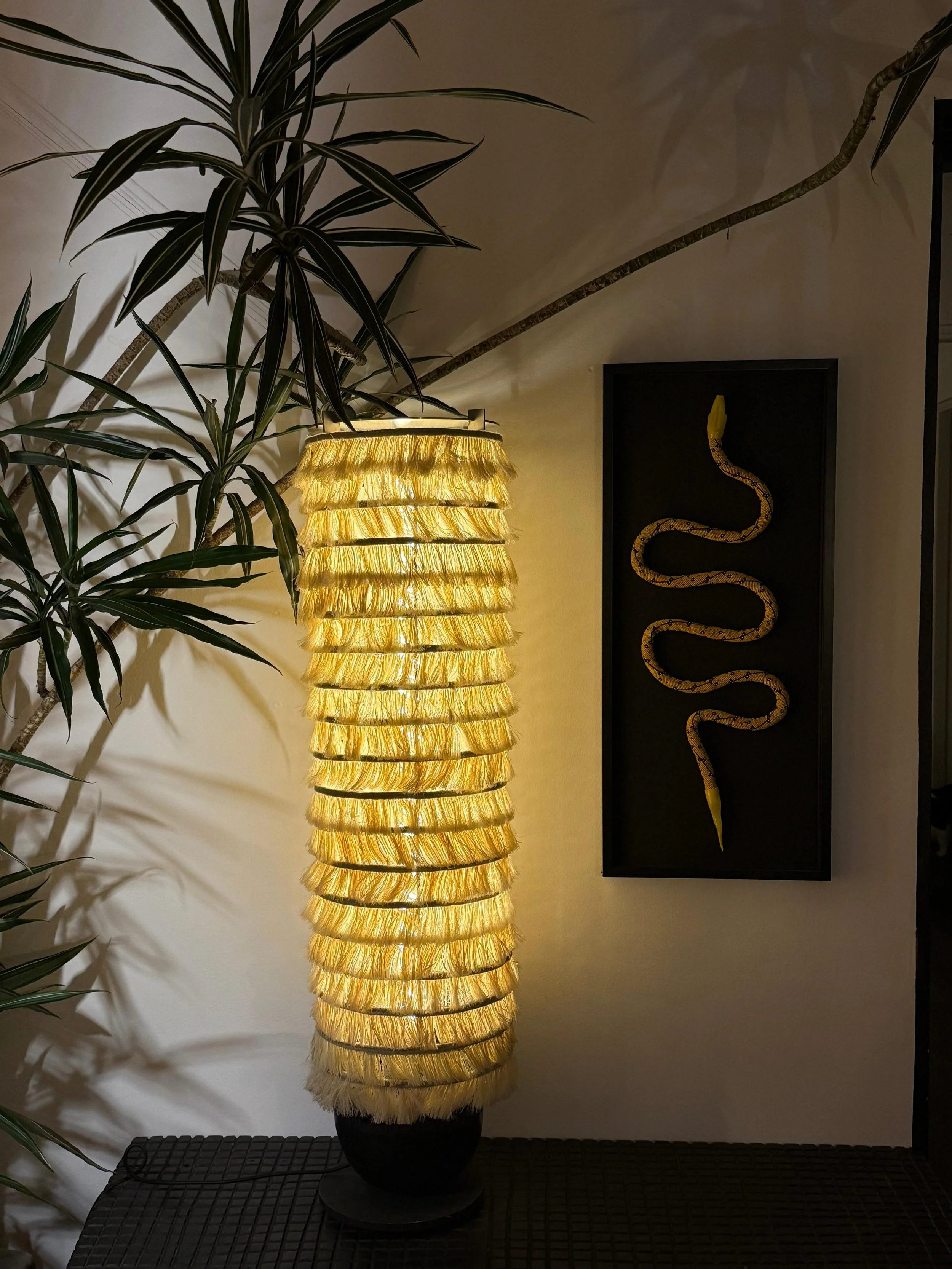
I’m very clear when selling a piece: I’m not fast, I don’t like mass production, and we are not machines. What’s beautiful—and very satisfying—is showing that we can still produce 200 units of one design and have each one retain its soul. They’re not copies; they’re pieces made one by one.
In many cases, I’ve preferred to lose a sale rather than suffer because we couldn’t meet unrealistic timelines. Things take time, and handmade work has value. There’s nothing more beautiful than when, after three months of waiting, a client says, “Wow, it’s even more beautiful than the photo. It was worth the wait.”
What do you wish people understood better about Colombian design and contemporary craft today?
I wish people wouldn’t haggle. In Colombia, it’s very common for someone to say, “Leave it to me for this much.” I wish people had the same—or even more—respect for handmade work and small brands as they do for major design houses like Hermès or Dior.
When this happens, I ask clients: Do you go into Chanel and say, “I want these shoes that cost $2,000, but I only have $1,000”? Usually, they look at me strangely and laugh—but they end up understanding why.
Where do you find inspiration in Bogota?
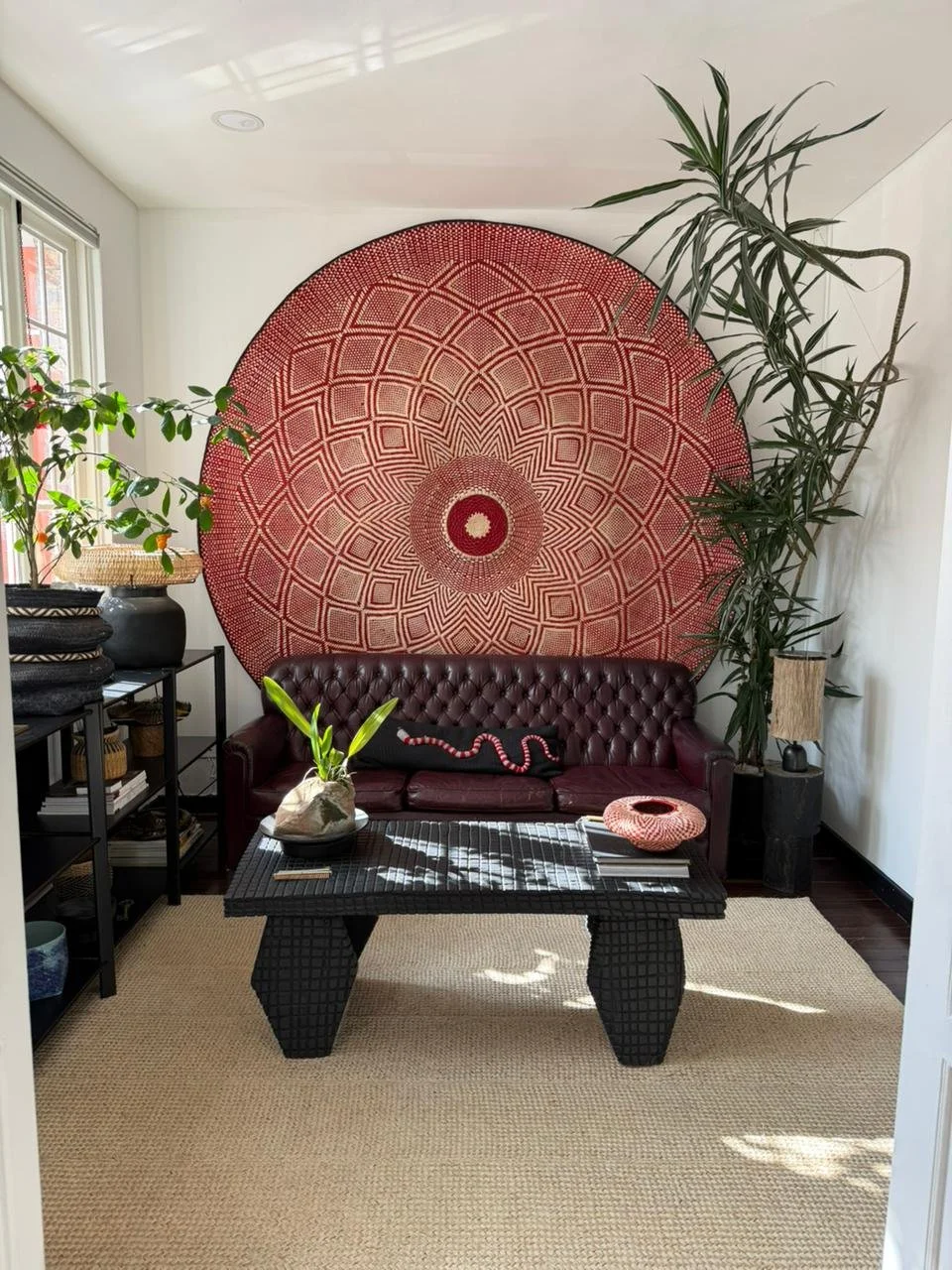
At home. For me, it’s a laboratory of ideas. I experiment constantly with the objects around me. I have the privilege of living in my home, which is also my workshop and my showroom—so it’s a space that’s always changing. And I sell everything. If someone falls in love with my dining table and wants to take it right then and there, they’re welcome to.
My home is a living space, always seeking change—new objects, colors, materials.
Another huge source of inspiration in Bogotá is food. I LOVE food, and Bogotá has an incredible food scene. You can have the most expensive restaurant with the most extravagant, delicious cuisine next to a street arepa stand that’s just as delicious and surprising. I’m the kind of person who loves listening to conversations at nearby tables—between the gossip and the food, I get a lot of inspiration.
For anyone who doesn’t know Bogota, can you recommend us 3 must-go places to experience the culture? (can be restaurants, museums, outdoors, stores… anything).
The Gold Museum (El Museo del Oro) is unique in the world, and I always recommend it.
If you visit in December, there’s Expoartesanías—a fair that brings together artisans from all over the country. It’s a way to experience all of Colombia in one place: cultures, materials, food, people, techniques. For me, it’s my Disney.
And visiting the páramo is essential. It’s a unique Andean ecosystem. To reach most páramos near Bogotá, you have to walk, and when you arrive, you encounter the ecosystem that provides most of the water we consume in the city. Seeing it firsthand is truly extraordinary.
What are you currently exploring?
I’m currently exploring a technique called Tamo, a type of marquetry from Pasto, in the south of the country, in Nariño, made using wheat stalks. I’m experimenting with how it behaves on surfaces like glass and wood, and how it interacts with light. I’m a big fan of the decorative arts, and the fact that these patterns are created strand by strand from wheat stalks completely amazes me.
Discover Alta Estudio’s latest collection available worldwide on their website and Instagram.