
Maker Series: 03. Jenny & Mau, founder of DAR Proyectos.
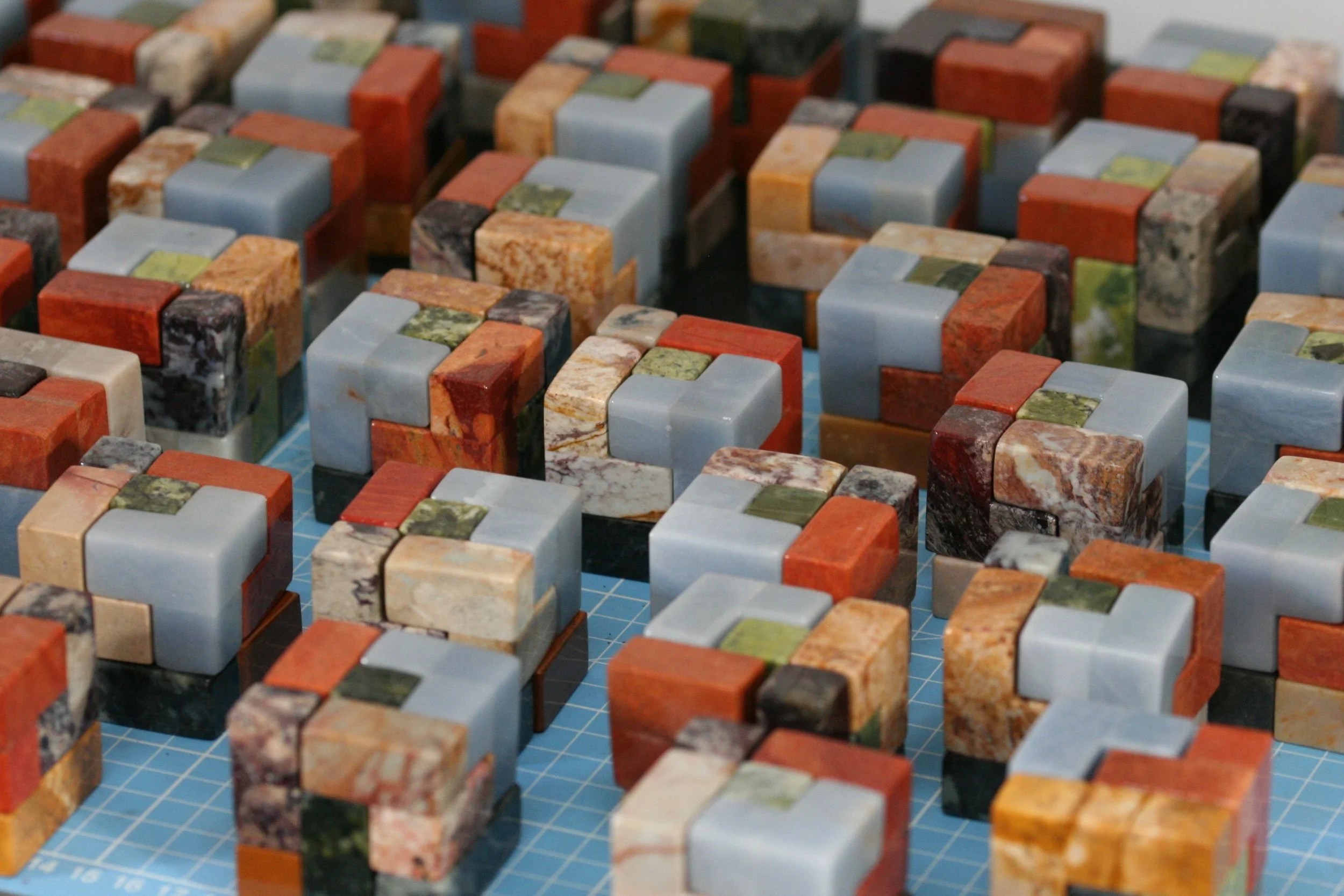
We travel to the Peruvian Andes to discover how DAR proyectos turn precious, untouchable Andean mountain gemstones into tactful, joyful design objects.
First, can you introduce yourself and your work?
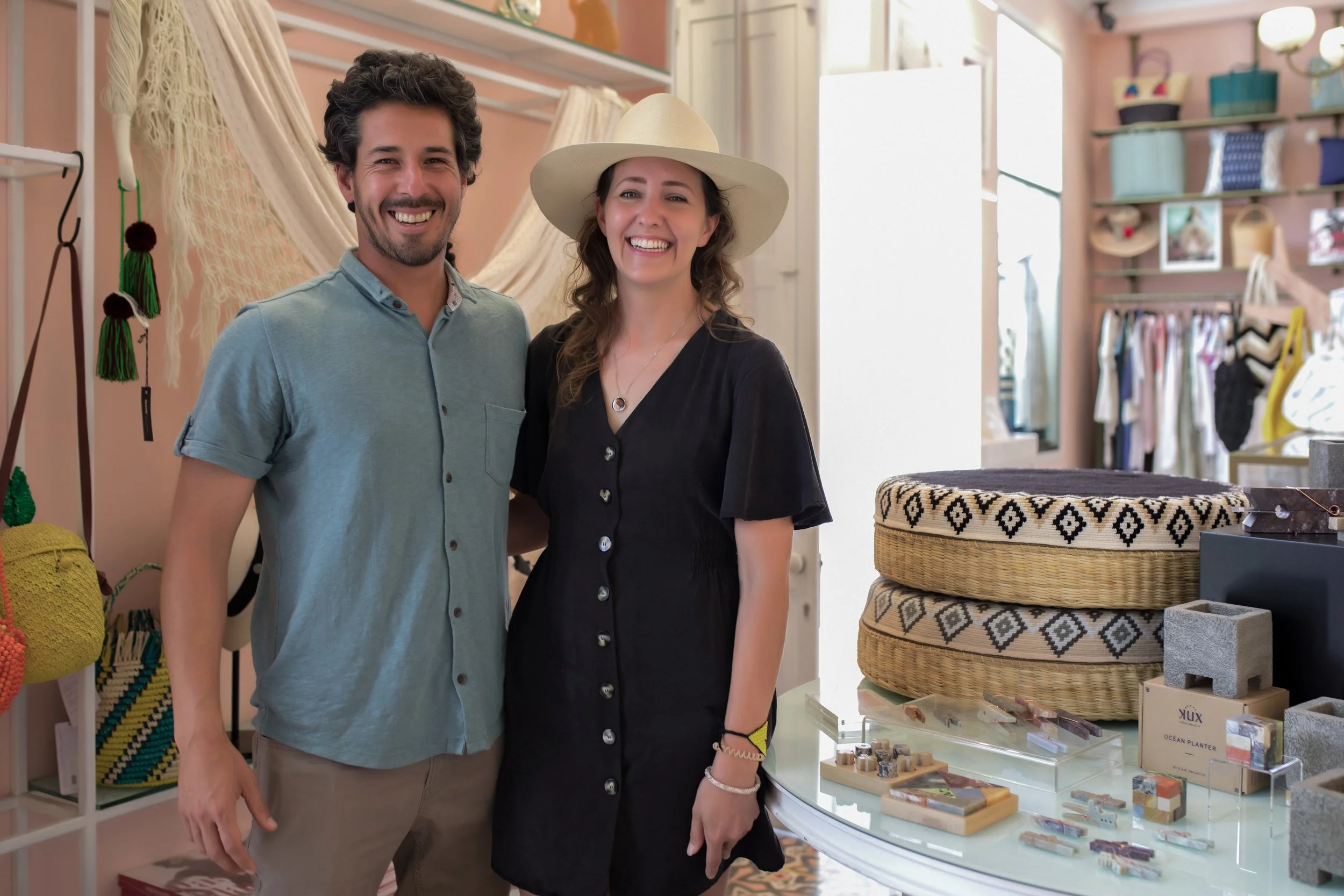
We are Jenny Boucher and Mauricio Navarro, a couple who share a mutual love of design and craft. We’re both designers — in textiles and industrial design — and have always been drawn to the depth of knowledge in indigenous craft, not just in technique but in worldview. Our journey started with Andean textiles, and after wrapping up a Canadian-Peruvian government textile project together, we knew we wanted to keep building something with purpose.It was clear from the start that this couldn’t be a one-time collaboration. If we wanted to support artisan communities in a meaningful way, we needed to build a long-term system that allowed their work to evolve and reach new audiences. Many workshops in our town have disappeared in the last decade, and traditional techniques are at risk of fading out. We saw DAR as a way to help preserve those skills while creating fresh, relevant designs that could bring value back to the craft — and help it thrive again.
Can you walk us through your creative process — from the first spark of an idea to a finished piece? What usually comes first: material, form, or story?
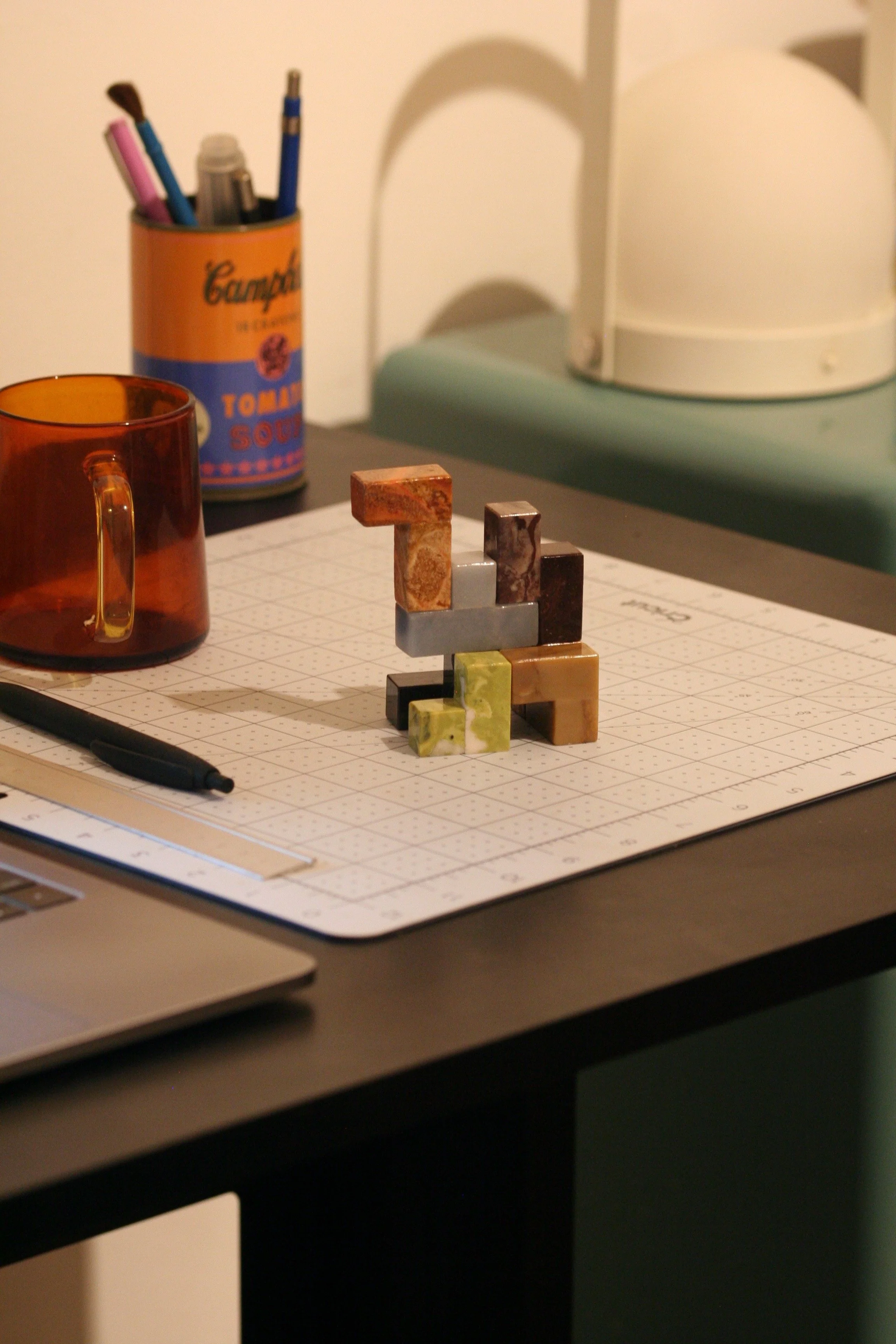
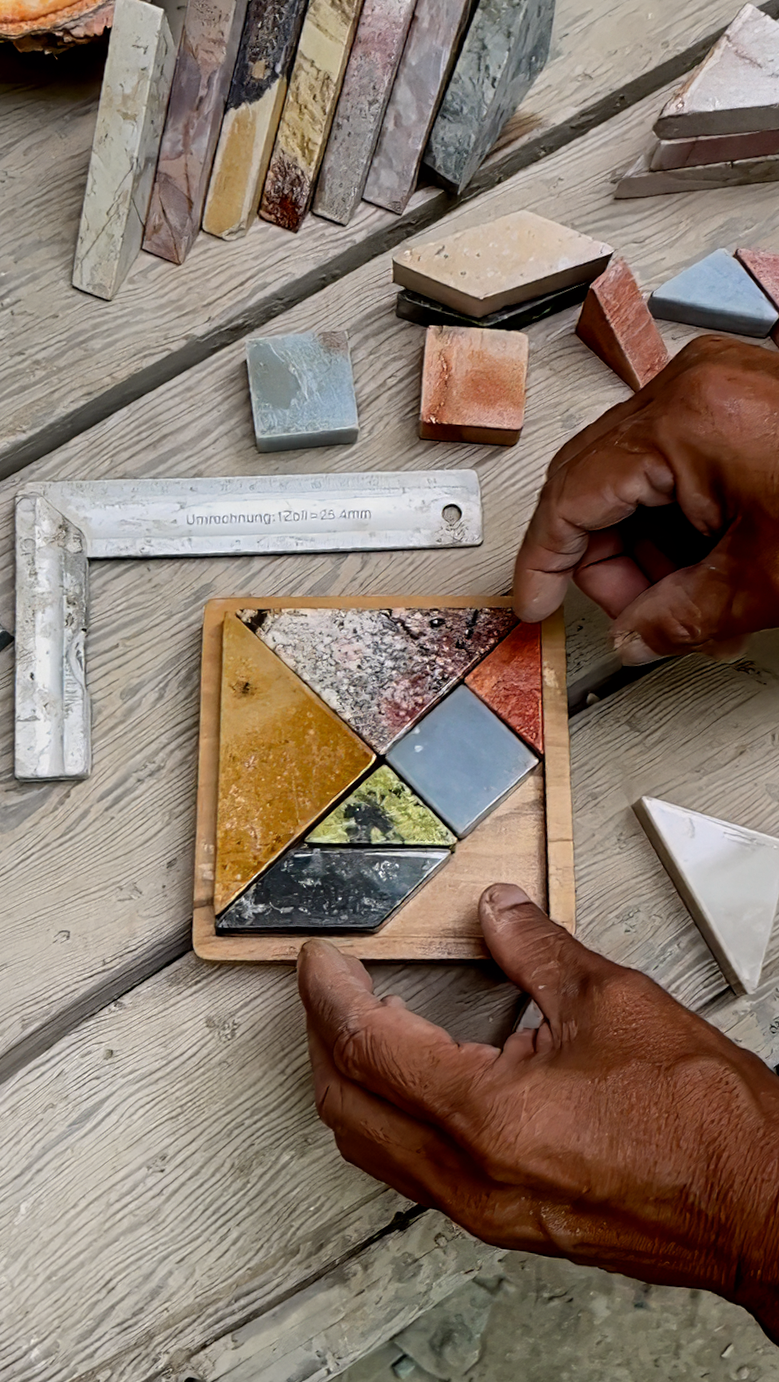
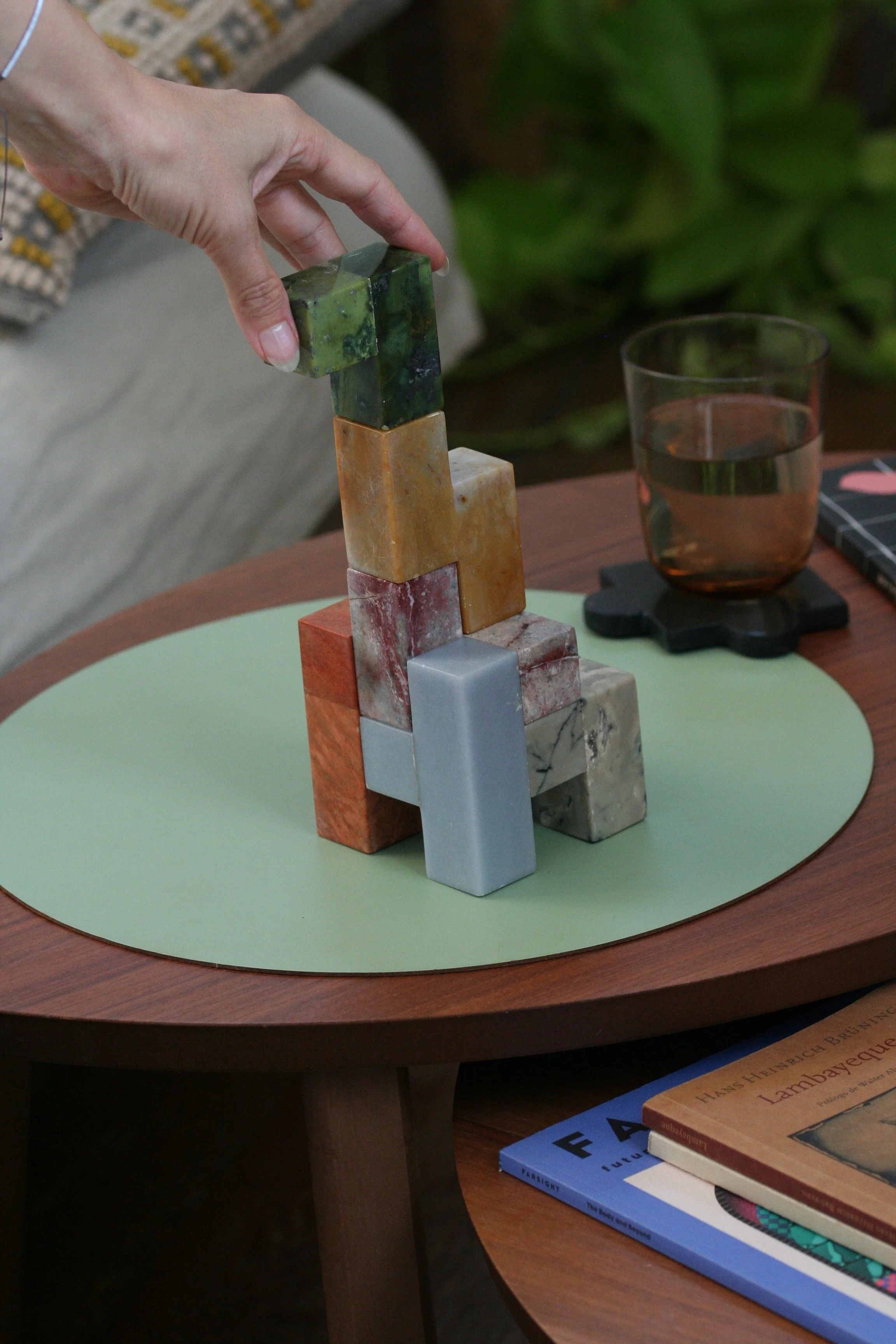
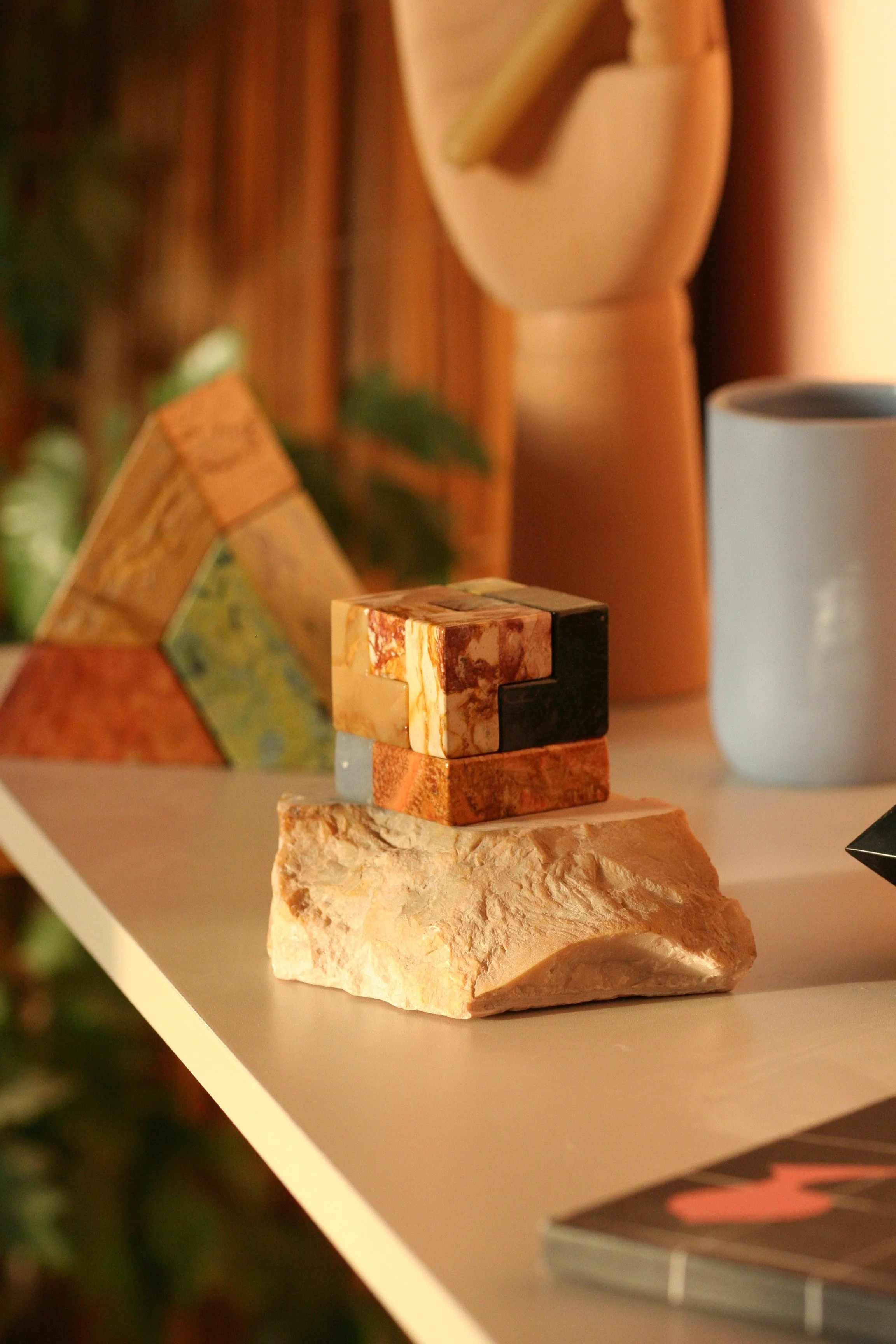
From the beginning, we’ve loved the idea of pairing playfulness with a material that usually feels precious or off-limits — like stone. Gemstones are often treated like things you can admire but not really touch. So, we wanted to flip that: to create pieces that invite interaction, that you can actually play with and use in everyday life.
That interaction is really important to us. It gives people a new way to connect with the material, not just as decoration or something beautiful sitting on a shelf, but as something that can be part of a fun, grounding moment. Making it playful opens the door for more people to engage with it, especially those who might not normally be drawn to gems.
Plus, the natural stones we work with from the Andes of Peru come in the most amazing colors which just adds to the whole playful vibe.
This basically means that our home is a continuous prototype lab. We test, rework, discard, refine. Nothing moves forward unless it is a full yes from both of us - aesthetically, technically, and commercially. That balance is important, as we only want to be creating objects with integrity, things worth passing down to someone else.
How does Peru shape your work?
Peru is incredibly layered: coast, mountain, jungle — each with distinct identities, materials and histories.
We root our work in these cultural continuities, but we are equally aware that tradition alone does not sustain a future. Techniques survive when they remain relevant. Hence, we focus on translating traditional skill into contemporary form.
The incredible raw materials available in Peru are also like none other. We get to reimagine an ancient, often intimidating material like stone and make it more approachable by playing with the colourful, rich hues in objects for modern life. We like the simplicity of creating objects that don’t require batteries, that make you think and be a little more present at the table.
What role do materials play in your practice?
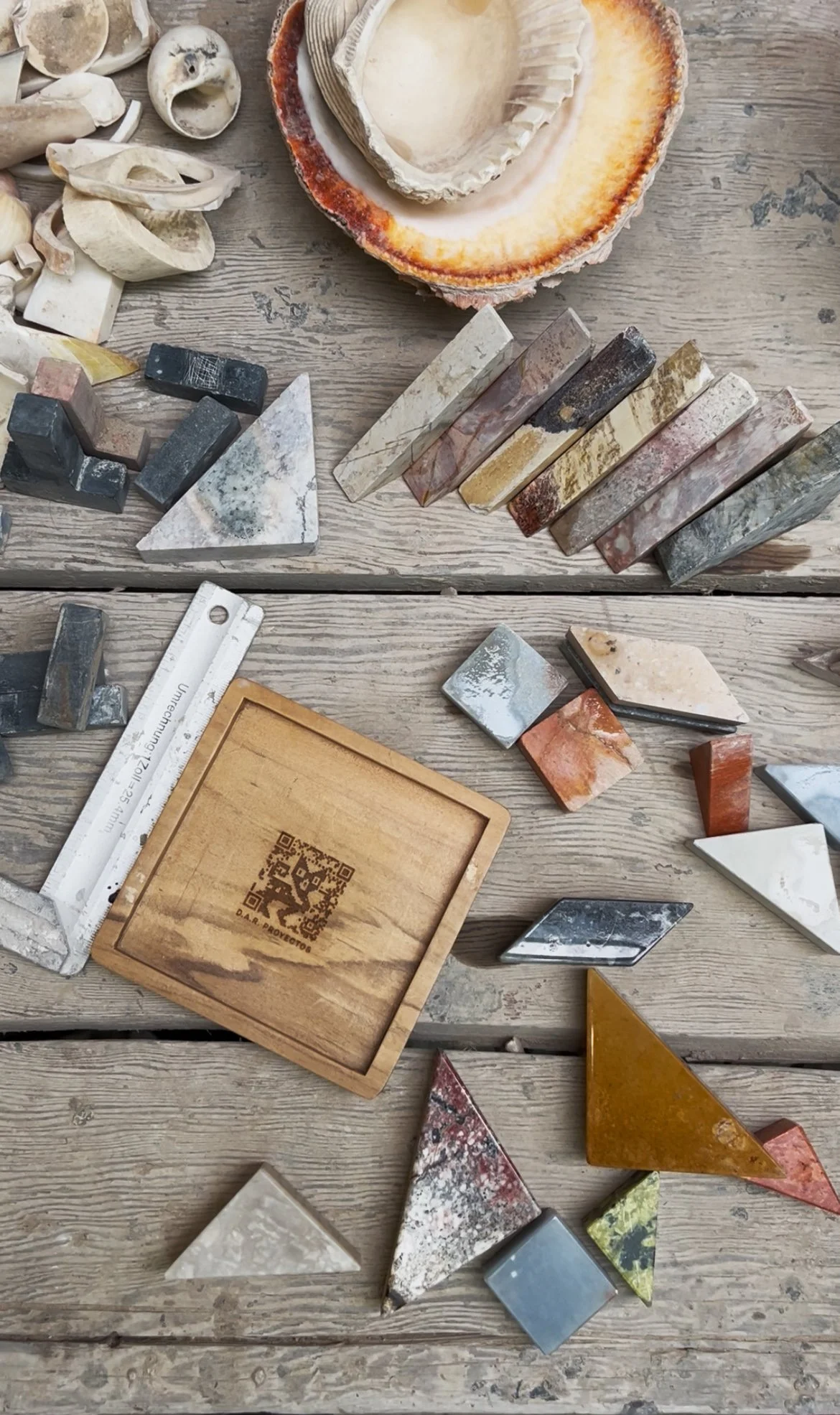
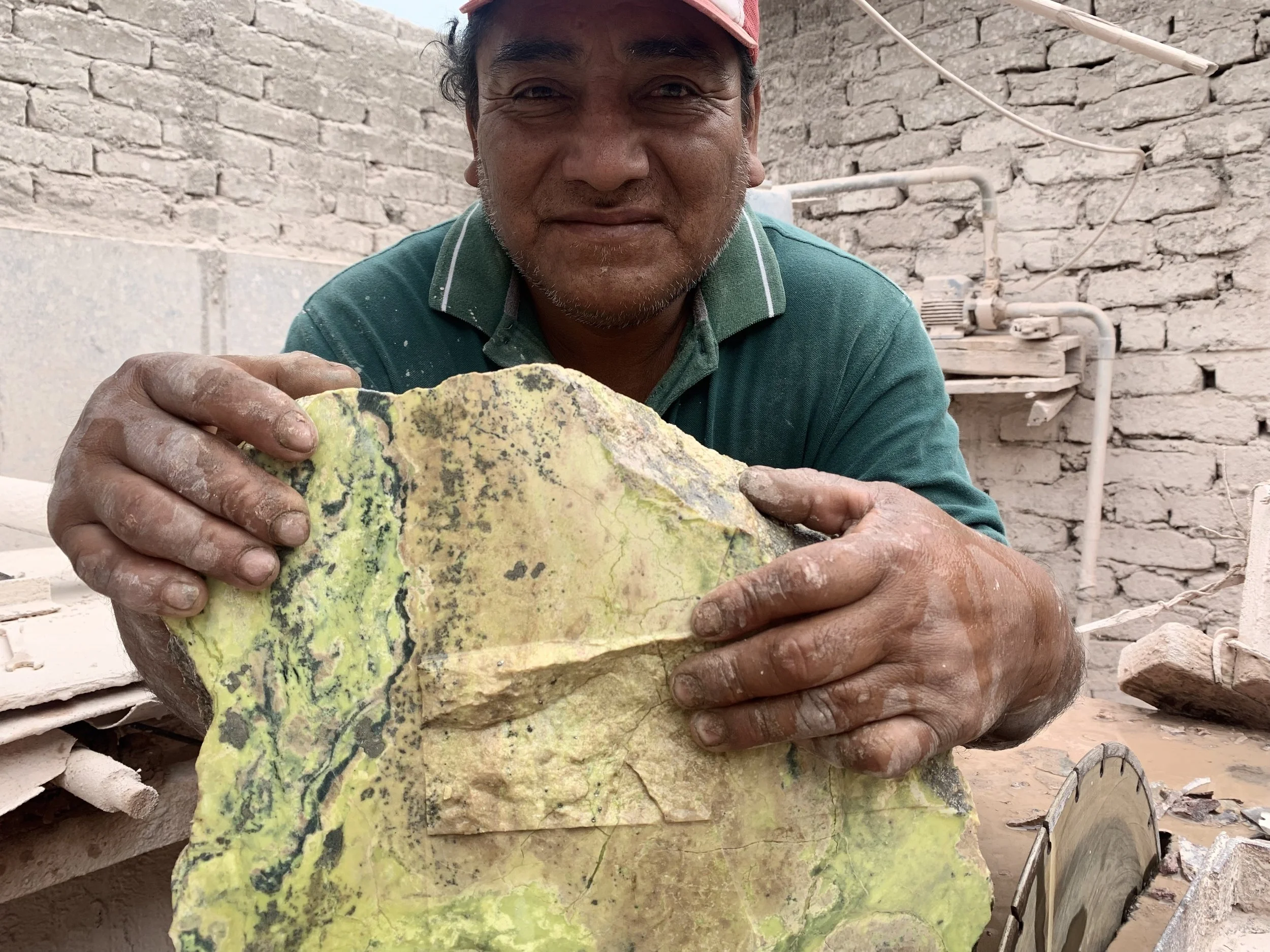
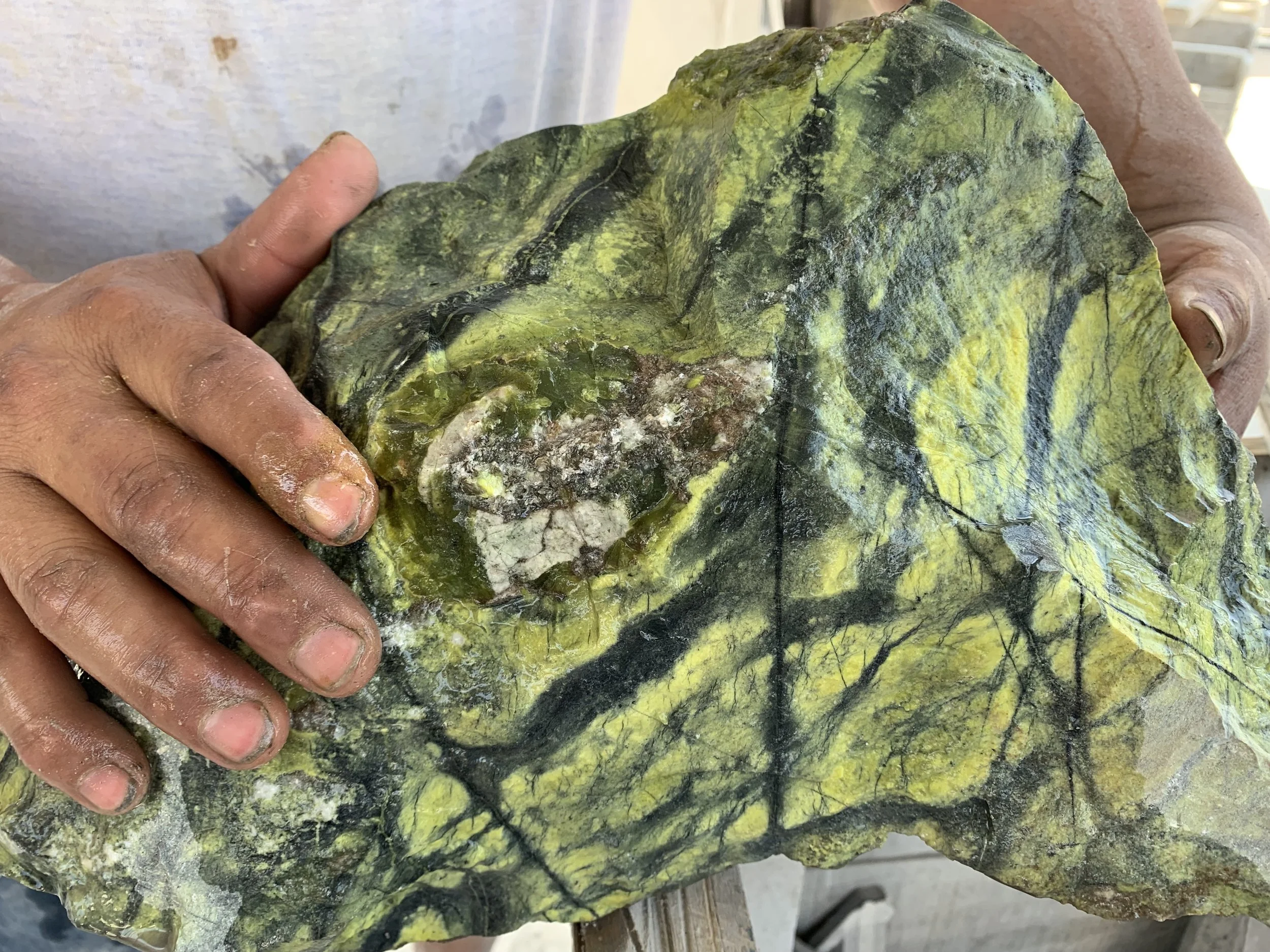
Our collections revolve around the natural gemstone materials native to Peru, so materials are not just aesthetic choices for us — they determine engineering, pricing, durability, and production strategy.
Every batch of semi-precious stone arrives with unique variation. Understanding how to cut for maximum yield, how to distribute tone across a collection, how to minimize waste. This is as much a part of our design process as sketching.
We’re constantly researching new stones depending on partner requirements: harder stones for functional objects, softer ones for sculptural pieces, and now integrating metals and other materials when the concept calls for it. The materials really determine boundaries within which we get to play.
How do you balance experimentation with respect for traditional techniques?
Function has been a gateway for us. By designing objects like phone holders or puzzle-inspired coasters, we invite new audiences: younger people, men who might not usually engage with gems. By pursuing objects that have market design, we’ve been able to allow stone carving workshops to flourish because their craftsmanship is recognized and in demand.
One important element that we target here is the reality that if the craftsmanship is not being well paid, it will not be pursued by younger generations. So many workshops have struggled to find young people to get on board, which means that techniques are at risk of disappearing. This confronts an often-romanticized perception when it comes to traditional craft, as we need to ensure that the effort artisans have put in to build their businesses is sustained by market demand. If it does not generate enough in the local economy, it will not be relevant nor prioritized in the long run.
How do collaboration and dialogue shape the final outcome?
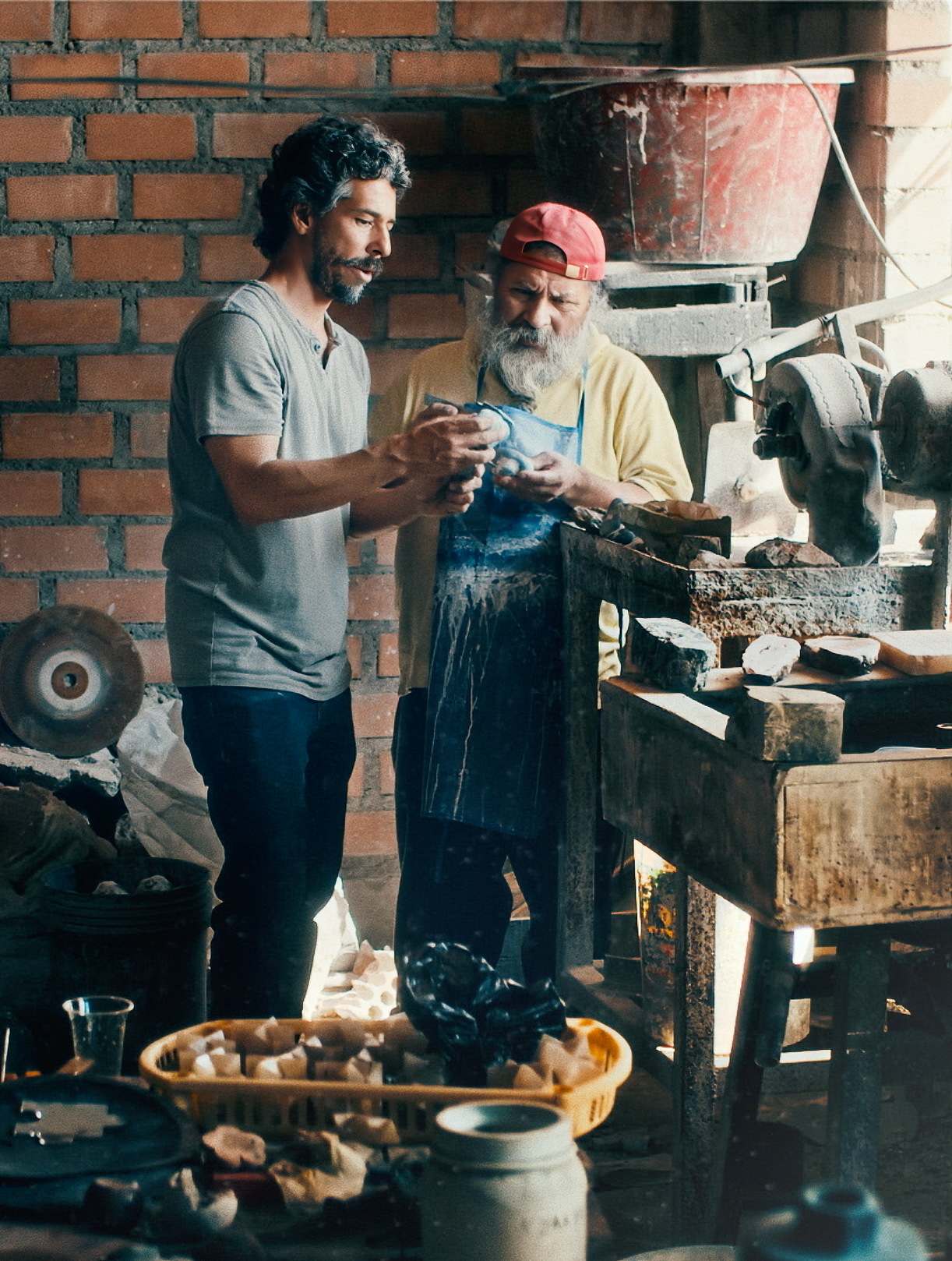
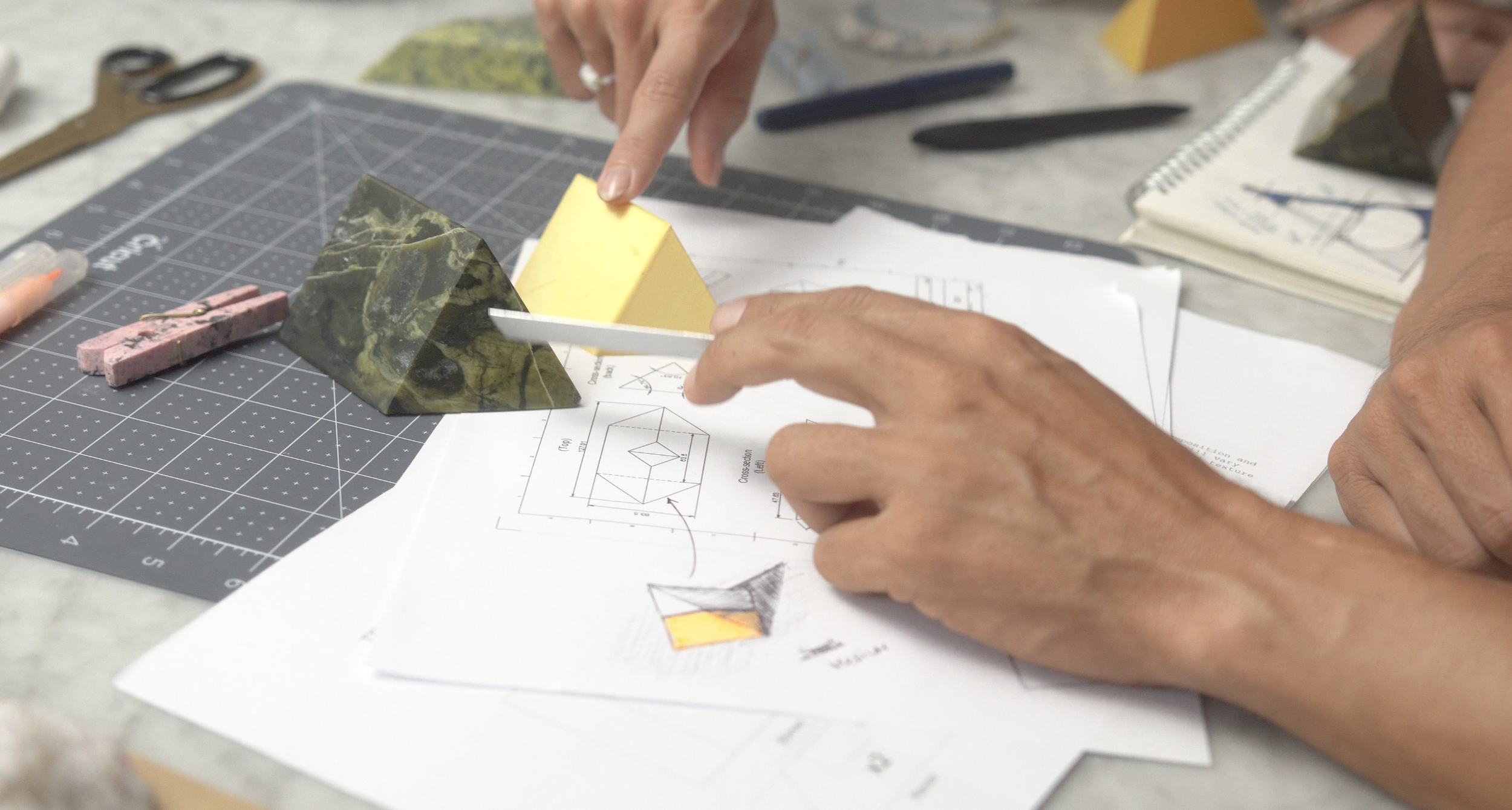
We have the pleasure of being local so we get to be super hands-on in the design process and collaboration is inherent in how we reach a final design. We prototype together, adjust tooling together, problem-solve in real time.
Artisans have the final say in what is realistically achievable at production level. We support not only design, but production planning, pricing structures, and financial literacy. It’s essential that our collections are built sustainably, not reactively. We’re really pleased to have been NEST Certified for the past years, which articulates all the work we’ve done to build a transparent, informed ecosystem since day 1.

How important is time in your process?
We’ve built this collection over 10 years, and it’s certainly not been a rush to the finish. Anyone who has worked in this industry knows that developing an artisanal based practice is not a light task — trust, access, technical refinement and financial awareness are some of the many barriers to the market that artisans face.
We’ve positioned ourselves as an effective intermediator by showing up consistently, bringing in local partners and then creating regular orders, and so we are thrilled that the core collection we’ve developed over time continues to sell and enable the whole infrastructure.
What do you wish people understood better about Peruvian design today?
Peruvian culture is incredibly sophisticated — materially, historically, and visually. Yet much of the economy remains informal, which creates many barriers to scaling and to achieving visibility.
There are extraordinary designers and makers here building serious, globally relevant work. We want to see more durable partnerships that recognize both creative depth and structural complexity of these incredible techniques to help build their recognition.
Where do you find inspiration in Peru?
We live in a small rural coastal community, and our greatest inspiration comes from daily proximity with our team: sitting with artisans, seeing experiments unfold organically, workshop conversations that spark new ideas.
There are also some very cool ancient ceremonial sites near us – Huacas —powerful temples where you can feel the energy of literal centuries beneath you. That sense of time, of material permanence, of giving back to the earth often informs how we think about longevity in objects.
For anyone who doesn’t know Peru, can you recommend 3 must-go places?
If you love textile history and material archives, Museo AMANO is extraordinary - one of the most carefully preserved collections of pre-Columbian textiles in the world.
When we’re in Lima, we always aim to go to Siete Restaurante in Barranco. Everything we’ve ever tried there has been phenomenal.
And beyond Lima: leave the capital. Peru’s landscapes shift dramatically within hours - coast, Andes, jungle - each with its own material culture and identity that are so worth exploring.
What are you currently exploring?
Right now, we’re expanding our material vocabulary to include some exciting new materials.
Alongside our gemstone collections, we’ve developed a number of pieces in brass and silver for exclusive partners this past year, and we’re exploring our own pieces with these new material options. We’re also working on a line of stone adorned ceramics to bring one collection to life in a way that we’ve always imagined. It’s been particularly fun to explore these new materials with different collaborators, as we get to go deeper into the development together and can strengthen our network of artisan creators.
Visit DAR proyectos at dar-proyectos.com and on Instagram at @darproyectos
