
Maker Series: 04. Meet Popdots: Luis Cárdenas, Melissa Aldrete, and Moisés Bautista.
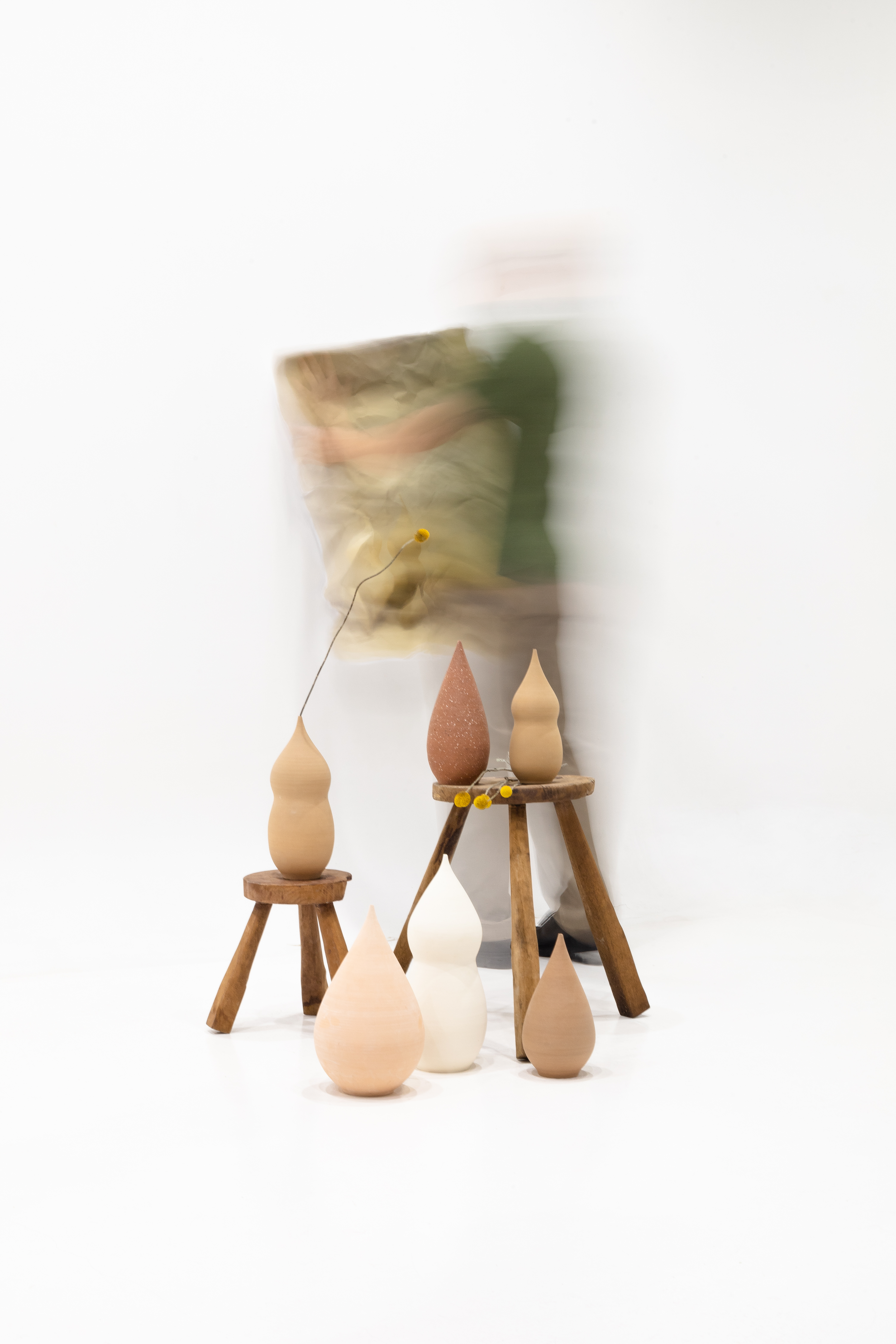
We meet with Popdots in their studio in Zapopan, Guadalajara. Together we discuss their approach to ceramics, not as a craft to preserve, but as a language to keep alive.
To start, could you introduce yourself and tell us about your work?
My name is Luis Cardenas. Together with Melissa Aldrete, we founded the studio/workshop Popdots. The studio began in 2012 as a research studio focused on ceramic and pottery practice.
Rooted in a dissertation on contemporary design, we approach it through exercises of unloading and active thinking about the everyday objects that surround us. Through questioning, we allow ourselves to reflect on the concepts and notions that give soul to utilitarian products: ones that re-organize and dismantle the common logic of the applied arts.
In recent years, our practice has focused on the intersection of design and contemporary art. With the aim of studying, analyzing, and finding the best adaptation of past techniques’ uses and customs to current creative and critical practices, we have developed various research threads in the studio. They address both design in its intersection with space and context, and projects that explore sensitive production from its artistic, sociological, anthropological, and philosophical frameworks.
For us, curiosity and experimentation are a living force that drives our work. The specific qualities of the materials we work with contain within themselves paths of individual and collective reflection. Concepts such as time, transformation, progress, history, nature, and climate mark the rhythm and flow between making and thinking; for us, these rhythms and flows define and expand learning processes that we now recognize beyond the rational — through bodily and communal memory, through vital experience and the sensitivity developed through contact with the elements of the biosphere.
Today, Popdots is made up of Luis Cárdenas, Melissa Aldrete, and Moisés Bautista.
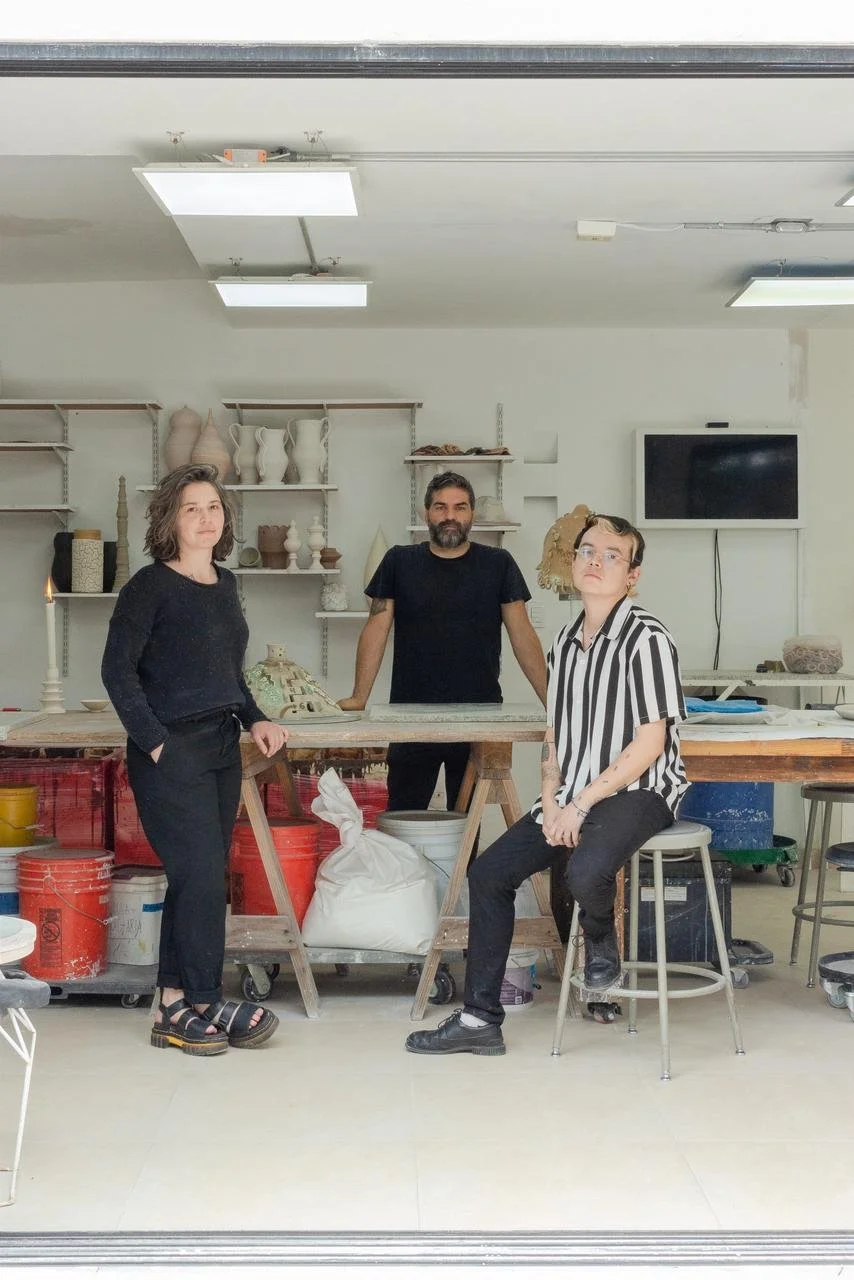
Could you walk us through your creative process, from the first spark of an idea to the finished piece? What tends to come first: the material, the form, or the story?
Ceramics, for the workshop, is a medium. That is why our process always encounters the material through other paths. We like to bring an idea to the workshop to question it, analyze it, reflect on it, and break it into pieces. We then depart from there and experiment with it. If it goes well, it can become a product or a work; or if it goes even better, it could open new paths of thinking for the workshop or our processes.
Experimentation is our working process. It has taught us to share and to commit fully to the process, all in service of maintaining the eternal search, both material and persona. It allows us to trace new possibilities in comprehension, adaptation, and continuity.
In the workshop, it is important to present an idea and mix it with more ideas, questions, and be curious — how to connect them, generate dialogues and debates that in turn can trigger goals that make processes and products improve.
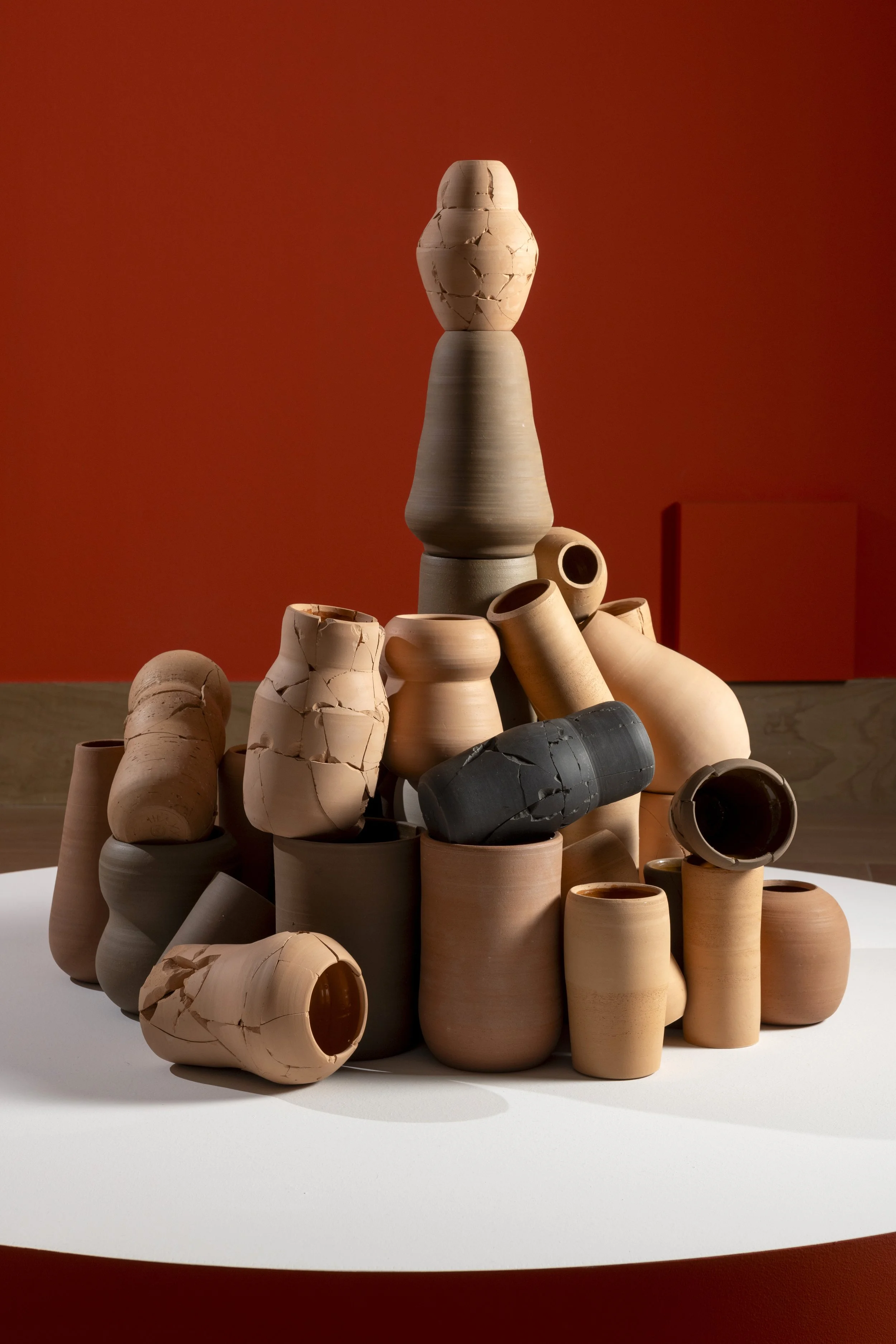
How does Mexico influence your work? Are there specific landscapes, traditions, or everyday details that constantly shape your designs?
Entirely.
For us, Mexico is an origin, an identity, an inspiration, and also a creative fuel. Between its virtues and its shortcomings there are wide spaces where creative and artistic contributions have a voice and a responsibility to act.
We enjoy understanding the Mexican “everyday life” and also its relationship with the objects that coexist within it. There is a living fiction in our traditions that contain imaginaries and a language that is very provocative for today. And although in some ways they have already been thoroughly digested, they continue to sustain us. Sometimes we think that more than an exercise in redesigning or reinterpreting objects or the past, what is needed is a deep translation: so that knowledge, rather than growing tired, reinforces our concepts and paths towards a better future.
What role do materials play in your practice? Do you start with what is locally available, or do materials reveal themselves throughout the process?
In our practice, the material guides our process. It is worth saying that clay is a material that makes you conscious of concepts such as time, transformation, progress, history, nature, and climate. It also enables rhythm and marks the back-and-forth between making and thinking as a constant dialogue. Its value lays in opening more possibilities to most of the objects born in the studio.
The material acts as the primary catalyst for conversation between us, the object, and the world. In the studio we say that objects are not made — rather, they are born — because the material, in order to “be,” requires preparation and accompaniment. Within the world of materials, clay, like many others, is an excellent vessel for nostalgia, stories, and memories of the past or yet to come, which are often activated simply by seeing, smelling, or touching it.
The birth of an object, for us, creates a dialogue. Normally in our process we seek to provoke a loss of control at some point along the path toward materiality. This can result in pieces that fall outside a standard form — the material leads with its own limitations. We believe that true faithfulness to form and beauty means pushing those limits, so that the relationship between object and space generates its own function. Utility is always beautiful, and beauty is not always useful.
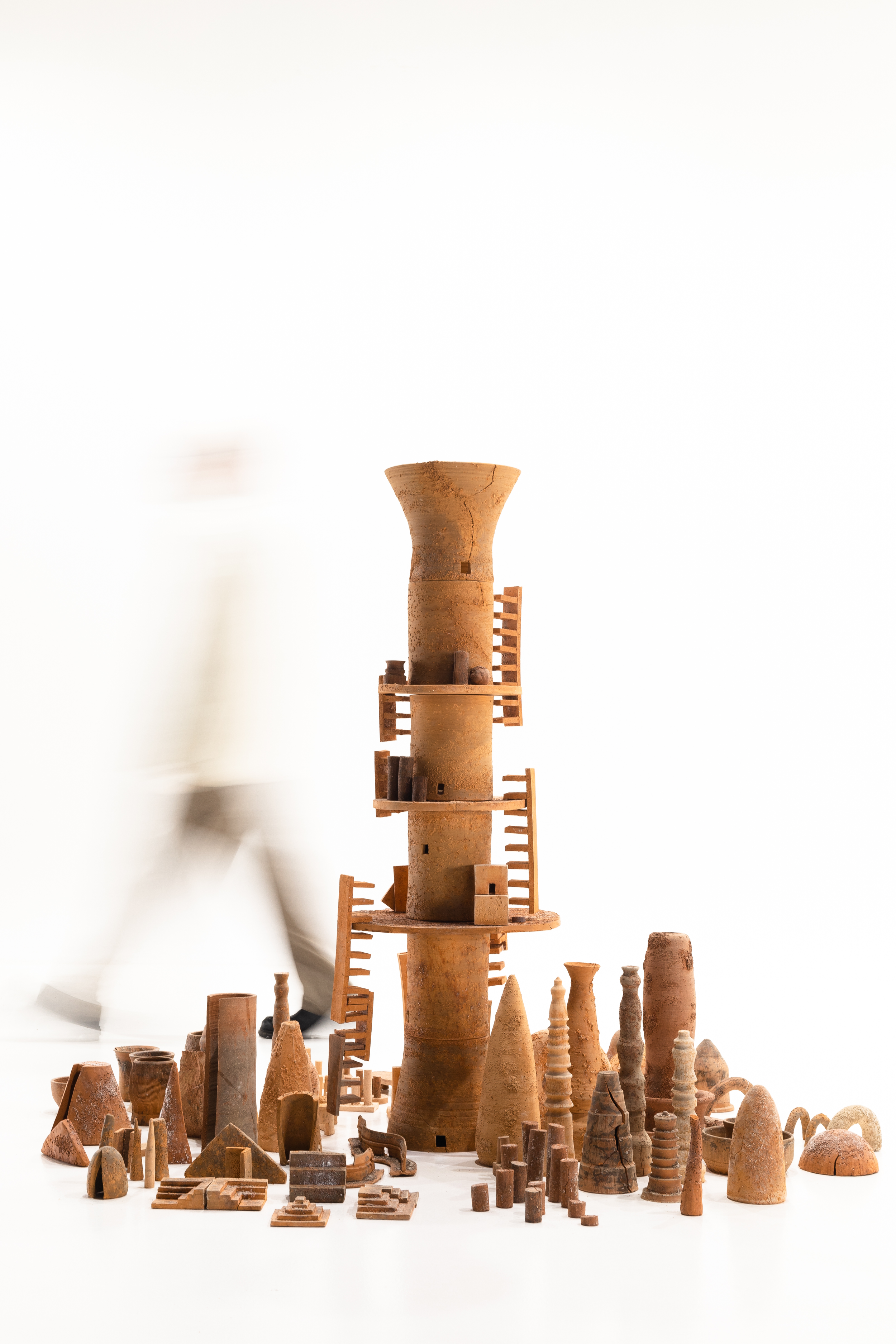
How do you balance experimentation with respect for traditional techniques or artisanal knowledge? At what moments do you allow yourself to push boundaries, and at which do you choose to preserve?
Tradition is a living communication: latent messages between times that, unlike history which is a ghost and always told for convenience. It helps us define ourselves, generate identity, and provoke wonder and coincidences with what is yet to come.
It is precisely out of respect for tradition that we experiment. We believe it is a duty as makers to explore new limits, to expand the world, and not to exhaust or squeeze us dry.
For us, it is about studying, analyzing, and connecting, in the most fitting way, the adaptation of the past with the present. It is about aspiring to the constant improvement of the things and activities that surround us, coexist with us, and grow alongside society. In our practices, both ceramics and design maintain this philosophy and their artisanal process. In order to move forward quickly, we move without haste, and we always remain in constant dialogue, questioning the material, the self, and our surroundings.
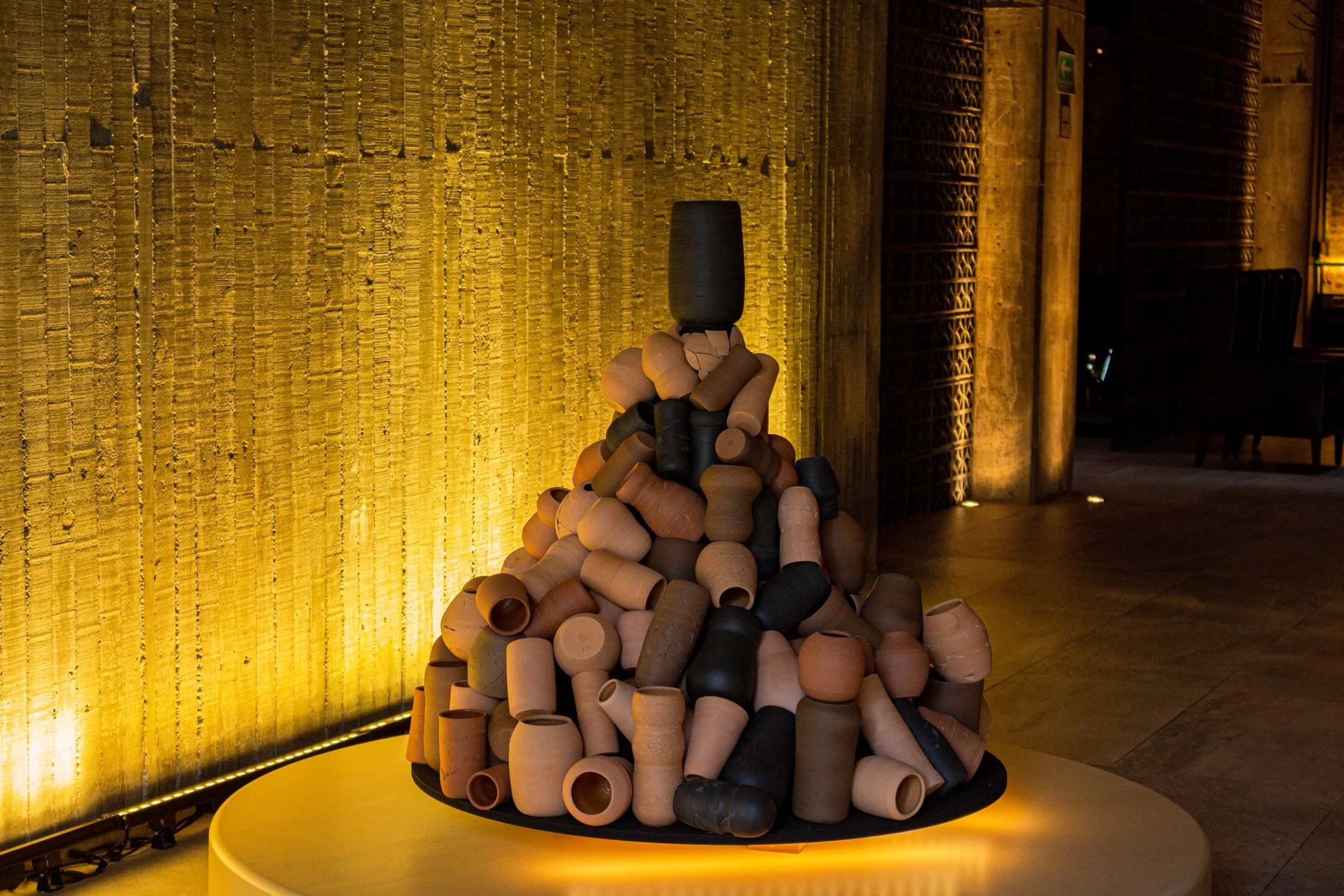
How do collaboration and dialogue — whether with artisans, suppliers, or other creatives — influence the final result of your work?
In the studio, it is key to provoke questions that arise through processes involving different techniques, and to answer questions that come up when we work with other disciplines, such as Gastronomy, Biology, Geology, Poetry, and Illustration.
It is important for us to be as involved as possible in all the processes we undertake to create Popdots pieces. Finding harmony in communication so that ideas can flow and be respected in collaborations — when you work with your hands, ideas also develop along the way. For us, it is essential to respect the craft and the practice of materials we do not work with regularly, and to acknowledge that modifications may arise during the process without losing the origin of the idea.
Time tends to be invisible to the end client. How important are slowness, repetition, or patience in your process, and how do you communicate that value?
We are lucky that within the ceramic craft, the process is already understood to be slow. In ceramics you can achieve a piece in 4 weeks as a prototype, though from the moment an idea begins to when a final piece is realized, up to 4 years can pass. Time is subject to how each person perceives it — when we collaborate, the intervals become more measured and therefore slower. In the end, that value is added as each project requires it; if it is a very long project, we usually exhibit all the documentation and research done throughout its development alongside the work.
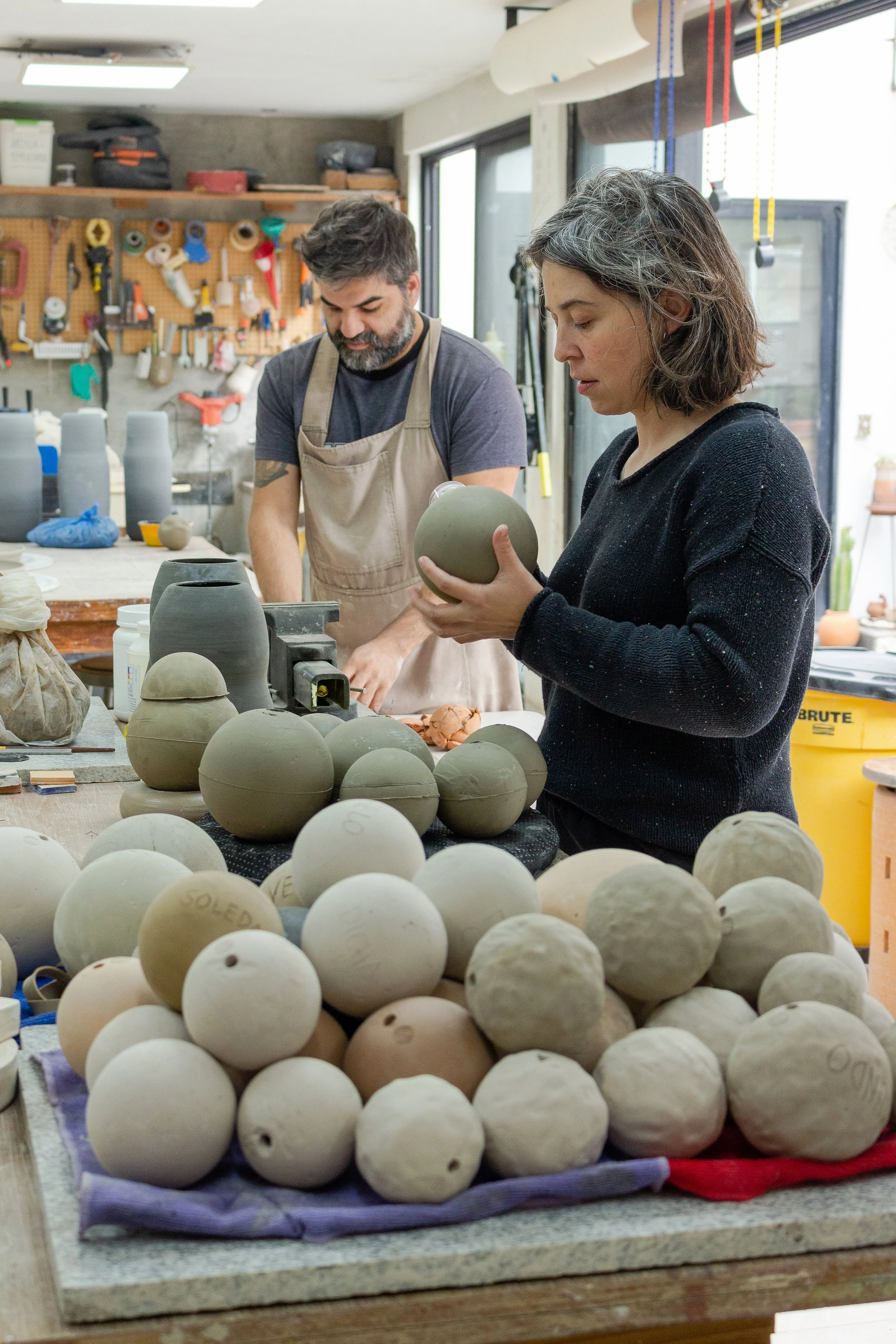
What would you like people to better understand about Mexican design and contemporary craft today?
Annual trends in design and art are quite exhausting for the production rhythm we have. Developing annual concepts hinders the depth and collectivity that processes with greater calm could achieve. We would love for immediacy not to corrupt artisanal processes — we consider it very important to communicate the significance and the difference in quality that having to be relevant twice a year can negatively cause.
Where do you find inspiration in Zapopan/Guadalajara?
Our concepts tend to derive from duality: (whole – broken), (alive – dead), (bright – opaque). We believe, rather, that inspiration finds us — we just have to stay sensitive and always curious. In the studio especially, what ignites us most is the street, the neighborhoods, the city as a system, protests, graffiti, urban markets, Mexican folklore.
For those unfamiliar with Zapopan/Guadalajara, could you recommend three must-visit places to experience the culture? (Can be restaurants, museums, outdoor spaces, shops… anything.)
El Oráculo on Cerro de la Reina in Tonalá on July 25th each year — the season of the Tastoanes.
The Cabañas Museum and a visit to San Juan de Dios.
A visit to CUAAD and the Barranca de Huentitán park.
A Sunday outing along the Via Recreativa.
What are you currently exploring?
We are focused on deepening the lines of work we have built over more than 10 years. Our explorations and we ourselves have been nourished by time, and our aim is to trace a theoretical thread of coexistence with the objects we have made and continue to make. Our technique has evolved toward communicating better with the material, the self, and our surroundings. We are also exploring various media and materials that, through ceramics, help us continue to provoke and open new dialogues.
Visit Popdots at pop-dots.com and on Instagram at @popdots
